


Last updated: October 12, 2026
Key takeaways
- Hydroxyapatite and nano-hydroxyapatite share identical chemistry; particle size is the only distinction.
- Nano-HAP’s smaller particles provide greater surface area and deeper tubule penetration, giving it an advantage for sensitivity and active enamel remineralisation.
- Nano-HAP has been used safely in Japanese oral care since the 1980s and received EU regulatory approval in 2021 for concentrations up to 10%.
- Regular HAP is the practical choice for DIY toothpowders, budget-conscious use, and those who prefer to avoid nanoparticles on principle.
- EU labelling rules require nano ingredients to be declared, making it straightforward to identify which form any product contains.
You start researching hydroxyapatite toothpaste and realise there are two versions on the shelf: regular hydroxyapatite (HAP) and nano-hydroxyapatite (nHA). The marketing makes them sound completely different. Some claim nano is the only “real” version. Some claim nano is unsafe. Most of both arguments are wrong.
Here’s the careful, science-aware breakdown of hydroxyapatite vs nano-hydroxyapatite: what each actually is, where each works better, and how to choose.
What both have in common
Both are calcium phosphate compounds with the formula Ca10(PO4)6(OH)2. Both are the same mineral that makes up the bulk of tooth enamel and bone. The chemistry, the elemental composition, and the biological role are identical.
The only difference is particle size.
What “nano” means here
“Nano” simply means a particle in the nanometre range — specifically, where at least one dimension is between 1 and 100 nanometres (1×10⁻⁹ to 1×10⁻⁷ metres). For toothpaste, nano-hydroxyapatite particles typically run 20–100 nm.
Regular HAP particles are much larger — usually 1,000–10,000 nm (1–10 micrometres).
Same molecule. Different sizes. Like the difference between a sand grain and a marble.
Why size matters in hydroxyapatite vs nano-hydroxyapatite
Surface area
Smaller particles have proportionally more surface area per gram. Nano-HAP has roughly 100–1000× the surface area of regular HAP, so it can interact with enamel and dentin much more efficiently per unit mass.
Tubule occlusion
Dentin tubules are typically 2,000–3,000 nm in diameter. Both regular and nano HAP can fit, but:
- Regular HAP particles tend to plug the tubule entrance.
- Nano HAP particles can pack into the tubule itself, occluding it more thoroughly.
For sensitivity relief, nano typically wins.
Surface adhesion
Nano particles bind more efficiently to tooth surfaces because they fit into microscopic surface defects. This translates to better remineralisation per brushing in lab studies.
Enamel penetration
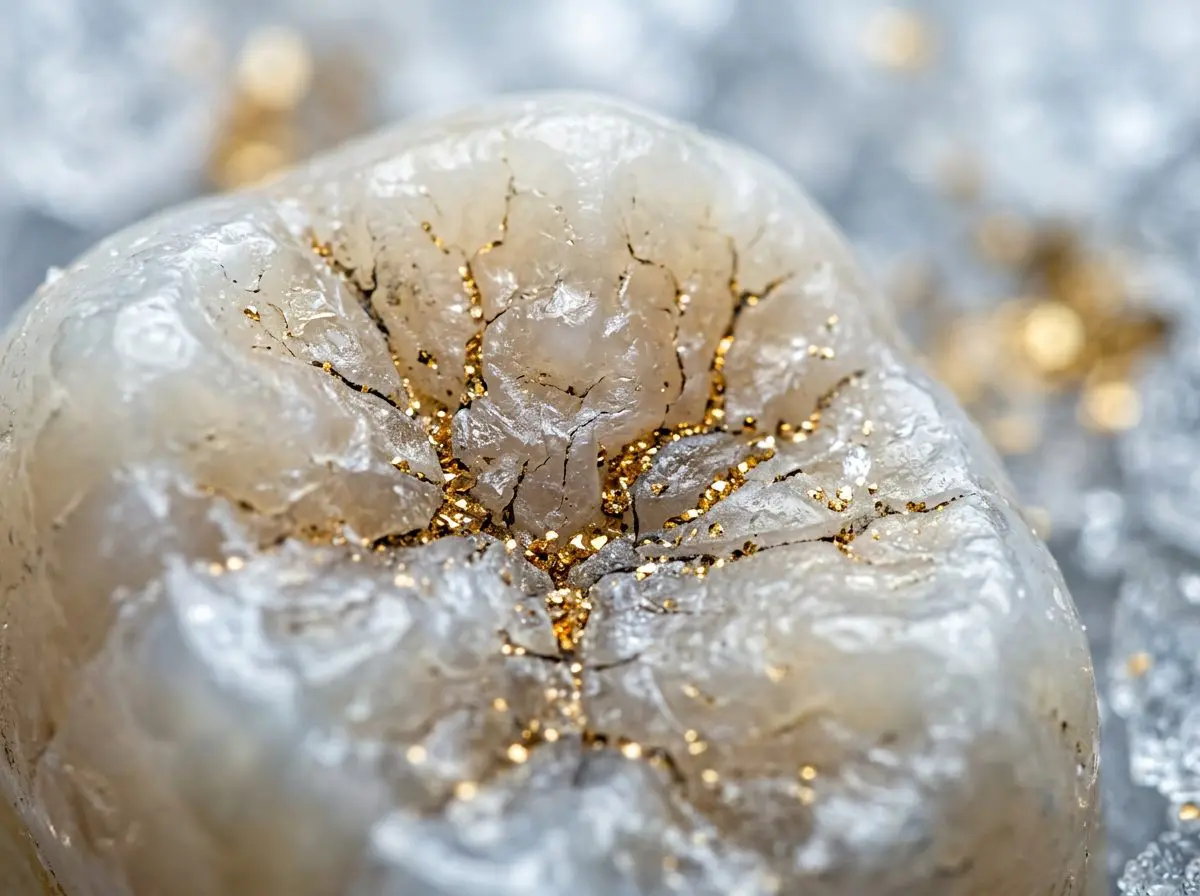
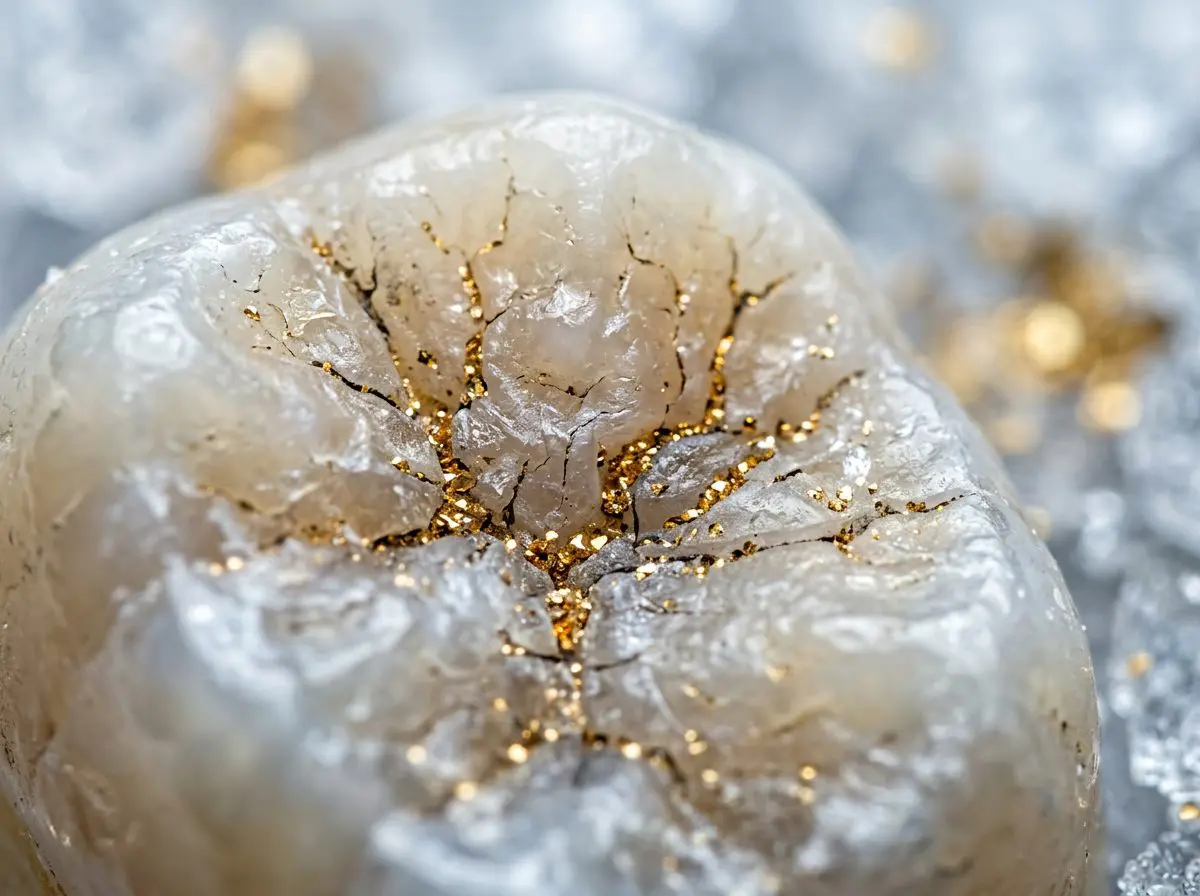
Nano particles can fill micro-cracks and demineralised zones in enamel that larger particles can’t enter. This is why Japanese clinical research has favoured nano-HAP for active anticaries claims.
The hydroxyapatite vs nano-hydroxyapatite safety question
“Nanoparticles in your mouth” sounds intimidating. The actual evidence:
Nano-HAP specifically
- Used in Japanese toothpaste continuously since the 1980s
- Approved as a safe additive in cosmetic and oral-care products in the EU and Japan
- Particles are biocompatible — the body uses calcium phosphate as bone and enamel material
- No documented adverse health effects from oral use over decades
The general “nanoparticle” concern
Some nanoparticles in some applications raise legitimate concerns — titanium dioxide as a food additive, certain metal oxides in air pollution. Hydroxyapatite isn’t comparable. It’s a biological molecule the body recognises and incorporates.
What about swallowing?
Nano-HAP, like regular HAP, is a food-grade ingredient. Swallowing small amounts during brushing is safe. (One reason it’s used in kids’ toothpaste in Japan.)
What about regulatory status?
The EU’s Scientific Committee on Consumer Safety reviewed nano-hydroxyapatite in 2021 and concluded that nano-HAP up to 10% in oral care products is safe under reasonable use conditions, provided the particles are non-needle-shaped and not in spray form. Most reputable nano-HAP toothpastes meet these conditions.
Where regular HAP still has a place
Lower cost
Regular HAP is significantly cheaper to produce. For a household-budget DIY toothpowder or for non-active-treatment use, regular HAP works fine.
Less concern for nano-skeptics
If you’ve decided to avoid nanoparticles in cosmetics regardless of evidence, regular HAP is identical chemistry without the size-based concern.
Simpler DIY recipes
Larger particles are easier to work with in homemade powders without specialised equipment. Most DIY HAP toothpaste recipes use regular HAP.
Children who can’t spit yet
Both are safe to swallow. Some parents prefer regular HAP to keep particle exposure conventional.
The hydroxyapatite vs nano-hydroxyapatite decision framework
| Your goal | Better choice |
|---|---|
| Sensitivity relief | Nano-HAP |
| Active enamel remineralisation (early caries) | Nano-HAP |
| Daily maintenance for healthy teeth | Either |
| DIY toothpowder at home | Regular HAP |
| Lowest price per gram | Regular HAP |
| Kids’ toothpaste | Either — both food-grade |
| Avoiding nanoparticles on principle | Regular HAP |
| Quickest visible results | Nano-HAP |
How to identify which is in a product
EU labelling requires nano-form ingredients to be marked. Look for:
- “Hydroxyapatite (nano)” or “Hydroxyapatite [Nano]”
- “Nano-Hydroxyapatite” or “nHA” in marketing copy
- Particle size disclosure (often 20–100 nm)
If the label simply says “Hydroxyapatite” without “nano,” it’s regular HAP. Both are valid; just know what you’re buying.
What about powder vs paste?
Both forms come as powders for DIY use and as ready-to-use pastes. Powder gives you more control over concentration and lets you mix with your preferred base; paste is more convenient. Same active ingredient.
FAQ
Is nano-HAP toothpaste worth the higher price? For active sensitivity or remineralisation goals, often yes. For daily maintenance, regular HAP is fine.
Can I switch between regular and nano HAP? Absolutely. Same molecule, no incompatibility.
Are bone-derived HAP and synthetic HAP different? Some HAP is sourced from purified bone material, some from purely synthetic mineral synthesis. Vegan products use synthetic; both are chemically equivalent.
Want to compare regular and nano HAP options yourself? Browse our HAP range — food-grade powder and paste, full transparency.