


Last updated: August 19, 2026
Key takeaways
- Hydroxyapatite powder is allowed in both carry-on and checked bags — powders are not restricted by the TSA liquids rule.
- The TSA powder rule: containers over 12 oz / 350 ml must go in a separate bin for X-ray screening and may get additional checks. Natural Answer jars (20–100 g) are far below that threshold.
- Regular toothpaste counts as a liquid: max 3.4 oz / 100 ml in carry-on, inside the quart bag. Powder sidesteps that rule entirely.
- Keep powder in its original labelled container (or a clearly labelled travel jar) to make screening painless.
- The final call at any checkpoint always rests with the security officer — pack so that the call is easy.
Yes, you can fly with hydroxyapatite powder — in your carry-on or checked bag. Powders aren’t subject to the TSA’s 100 ml liquids rule; the only powder-specific rule kicks in above 12 oz / 350 ml, and a 20–100 g jar of tooth powder is nowhere near it. If you’re planning hydroxyapatite powder travel, the short version is: pack it labelled, keep it dry, and sail through security while the toothpaste crowd surrenders their oversized tubes.
Here are the actual rules, verified against TSA guidance, plus the packing setup that works.
The TSA powder rule, correctly stated
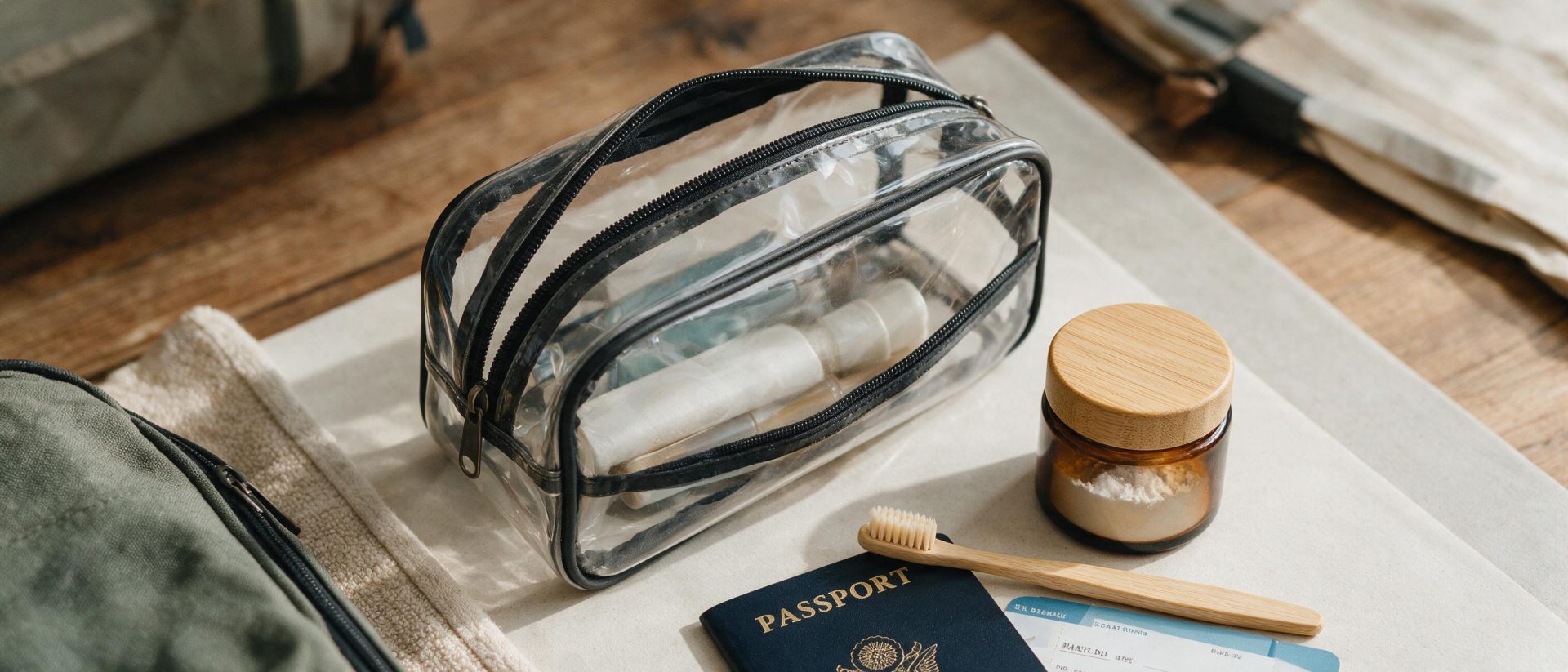
Since 2018, the TSA has screened powders in carry-on luggage under a simple size rule: powder-like substances in containers larger than 12 oz (about 350 ml) must be placed in a separate bin for X-ray screening. Larger containers may require additional screening, and officers may need to open them; the TSA encourages putting non-essential powders over 12 oz in checked bags instead. Below that size, powders ride along like any other toiletry.
Two things follow for tooth powder:
- You’re under the limit by an order of magnitude. Natural Answer’s hydroxyapatite comes in 20–100 g jars — a 100 g jar of powder occupies roughly 150–200 ml, well under 350 ml. No separate bin, no special handling required.
- Powders are not liquids. The famous 3-1-1 rule (containers max 3.4 oz / 100 ml, all inside one quart-size bag) applies to liquids, gels, aerosols, and pastes — including ordinary toothpaste. It does not apply to dry powder.
One honest caveat that belongs in every travel article: TSA’s own guidance ends with “the final decision rests with the TSA officer.” Rules describe the normal case; an officer can always take a closer look at an unlabelled bag of white powder. Which brings us to packing.
Powder vs toothpaste: why powder is the better traveller
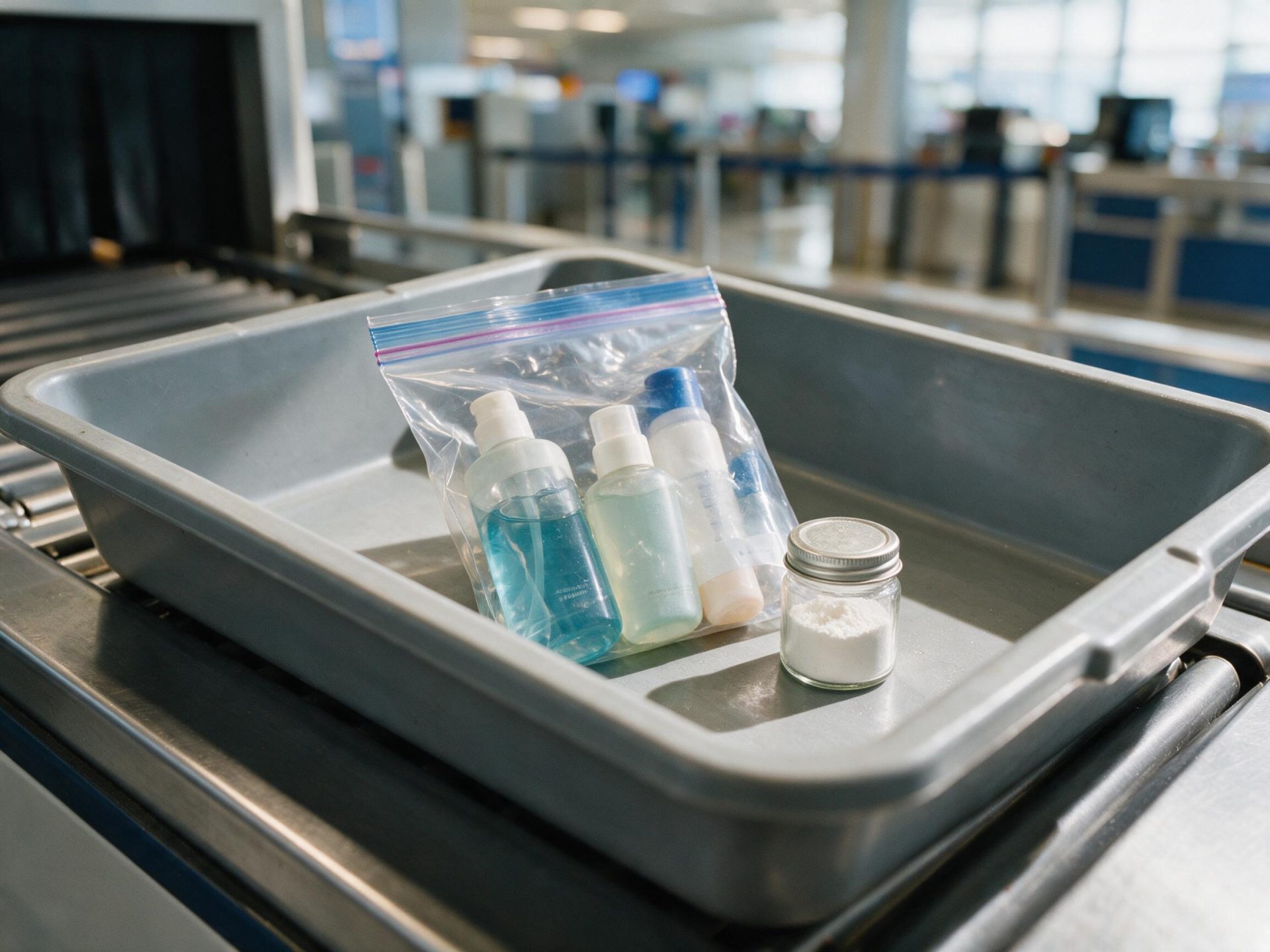
A standard toothpaste tube is 75–125 ml — hovering right at, or over, the carry-on liquid limit, and it competes for space in your single quart bag with sunscreen, shampoo, and everything else. Powder plays a different game:
- No liquid-bag real estate. Your quart bag stays free for things that genuinely must be liquid.
- Lighter and smaller. A few grams of pure powder replaces a full tube — a 20 g jar covers weeks of brushing, since you use a small dip per session.
- No burst tubes. Cabin pressure changes squeeze pastes out of half-closed caps; dry powder doesn’t care.
- No water content to spoil. Pure hydroxyapatite powder is shelf-stable dry mineral — heat and time on the road don’t degrade it the way they can separate a paste.
This is the same logic that makes solid toiletries the travel upgrade — our guide to traveling with shampoo bars and the TSA shampoo-bar rules cover the hair-care half of a liquids-free wash bag.
How to pack hydroxyapatite powder
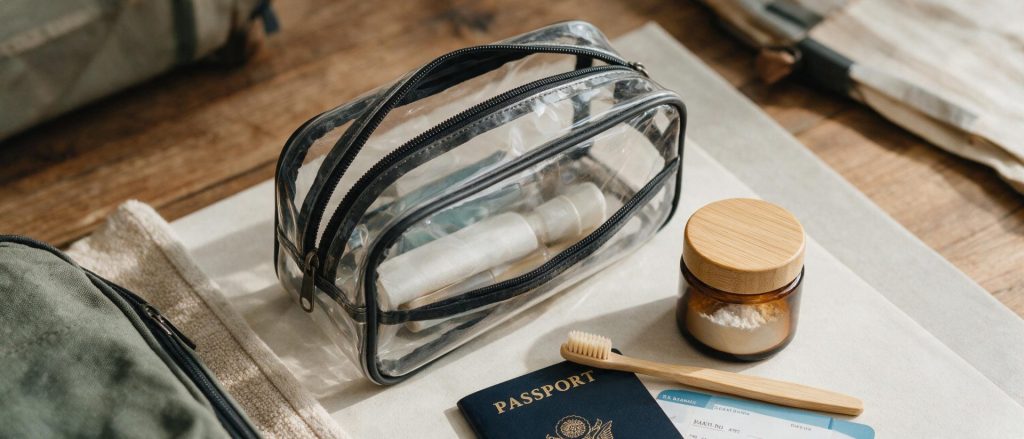
- Keep it in the original labelled jar when you can. A sealed, labelled container answers an officer’s first question before it’s asked.
- Decanting for short trips? Use a small, clean, clearly labelled jar — write “tooth powder / hydroxyapatite” on it. Avoid unlabelled zip-lock baggies of white powder; that’s the one packing choice that reliably invites a conversation at the checkpoint.
- Keep it dry. Moisture is the only real enemy — it clumps the powder and invites contamination. A jar with a solid screw lid, kept out of the shower bag, is enough. A small silica packet in your wash bag helps in humid destinations.
- Don’t share the scoop. On the road, dip a dry brush or tip a little powder into the cap or your palm rather than dipping a wet brush in the jar — keeps the remaining powder dry for the whole trip.
- Checked bags: no powder limit at all. For long trips, put the big jar in checked luggage and carry a small week-size jar in your hand luggage.
Dosing on the go
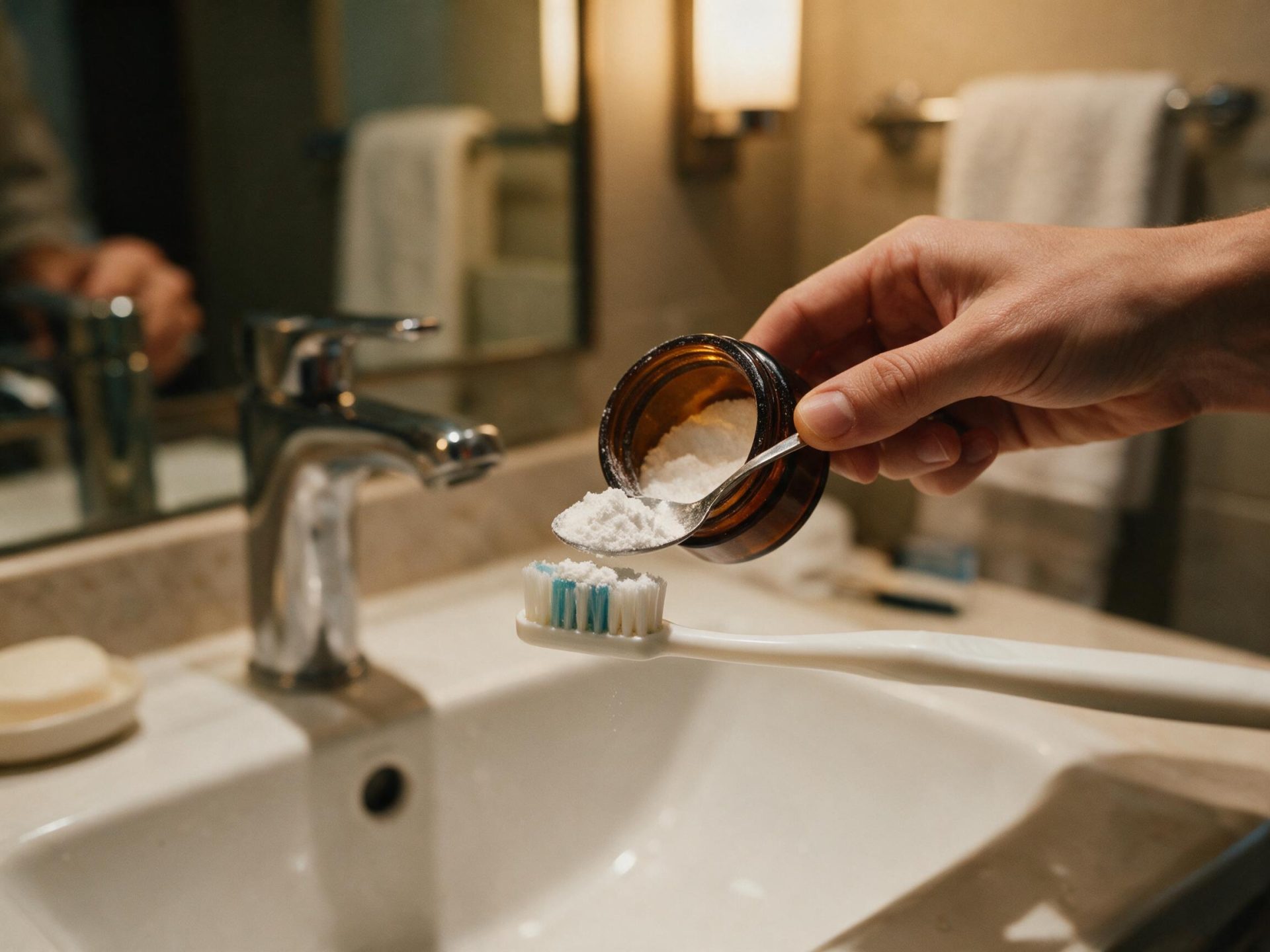
The routine is the same as at home, just tidier: dampen your brush, dip it lightly in the powder (or tap a pea-sized amount into your palm and pick it up with the brush), brush two minutes, spit, and skip the water rinse so the hydroxyapatite keeps working. If you’re new to powder brushing, our hydroxyapatite powder guide walks through technique and amounts.
Long-haul tip: a small bottle of DIY HAP rinse mixed at your destination (not before — homemade rinses only keep 5–7 days refrigerated) covers mid-day freshness without packing anything extra.
Flying outside the US?
The 12 oz powder screening rule is a TSA (US) policy, also applied on many US-bound international flights. The EU, UK, and most other regions restrict liquids but have no equivalent blanket powder rule — though security anywhere can inspect any item. The same packing advice covers you everywhere: small quantity, labelled container, easy to identify. In several years of customers flying with our jars, a labelled tooth-powder container has been a non-event.
FAQ
Can I take hydroxyapatite powder in my carry-on? Yes. Powders are allowed in carry-on and checked bags. Only containers over 12 oz / 350 ml need separate X-ray screening — a tooth-powder jar is far smaller.
Does tooth powder count toward the liquids limit? No. The 3.4 oz / 100 ml rule covers liquids, gels, aerosols, and pastes. Dry powder is exempt — unlike your toothpaste tube.
Will a jar of white powder get me stopped at security? A labelled jar under 350 ml normally passes without comment. An unlabelled plastic baggie is what draws attention — label whatever you decant into, and remember the final decision always rests with the screening officer.
How much powder do I need for a two-week trip? Brushing twice daily uses well under a gram a day, so a 20 g jar covers two weeks with plenty of margin.
Building a liquids-free travel kit? Browse our hydroxyapatite powders — pure mineral in travel-friendly 20–100 g jars, EU-shipped.