


Last updated: October 10, 2026
Why Scalp Acne Happens, and Where a Shampoo Bar Fits In
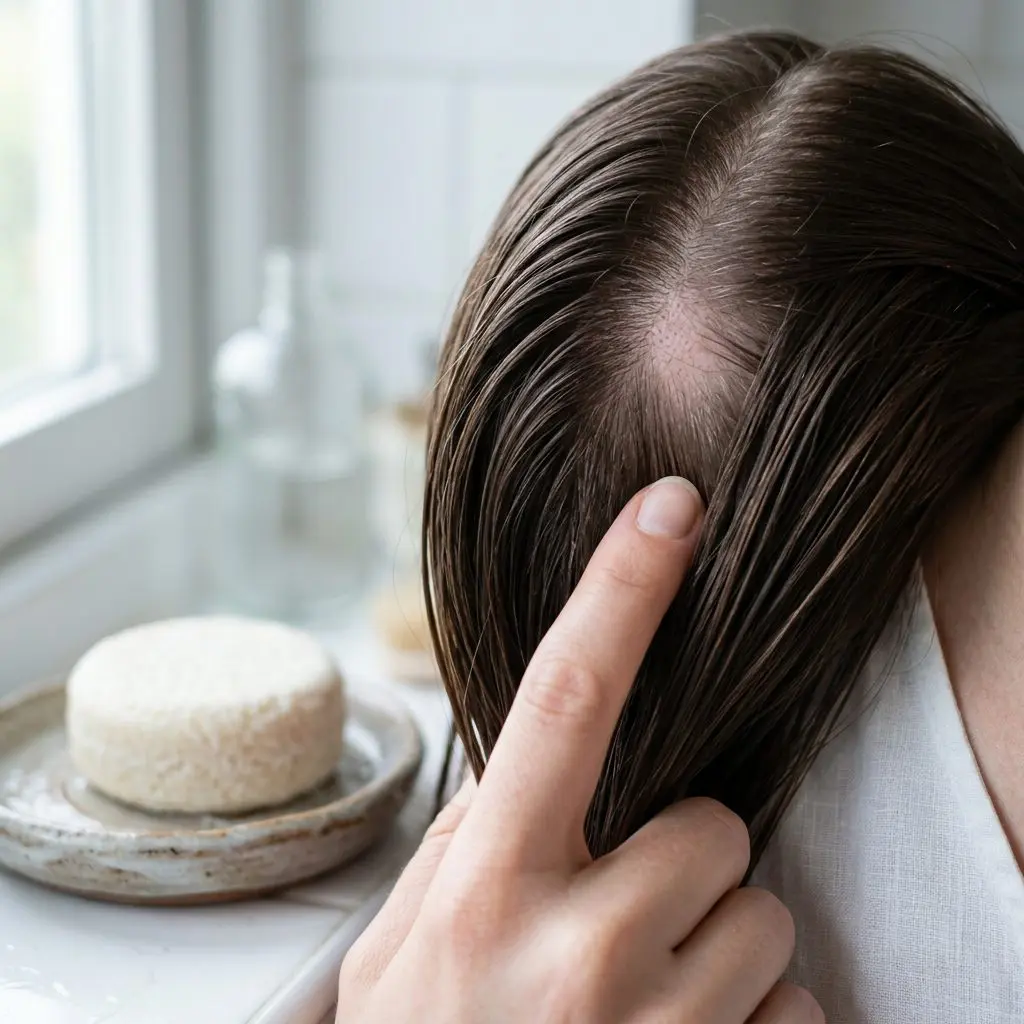
Scalp acne forms the same way acne forms anywhere else:
- Excess sebum (oil) clogs hair follicles.
- Dead skin cells pile up and block the opening.
- Microbes that live on every scalp multiply in the blocked follicle.
- Inflammation follows: red bumps, whiteheads, sometimes deeper spots.
Common triggers:
- Build-up from silicones, styling products, dry shampoo and heavy conditioners on the roots
- Infrequent washing on an oily scalp
- Hard water film that is never rinsed away
- Sweat and friction from helmets, hats and headbands
- Hormonal changes (puberty, the menstrual cycle, menopause)
A shampoo cannot change your hormones. What it can do is keep the scalp clean and free of build-up. That is the part of the problem you control in the shower.
What a Good Shampoo Bar Does for an Acne-Prone Scalp
1. It Cleans Without Leaving a Coating
Silicones make hair feel smooth by coating it. On the scalp, that coating can sit around follicles. A bar without silicones leaves nothing behind that you did not put there yourself.
2. It Washes Thoroughly
Real soap is very good at lifting oil and old product. For an oily, acne-prone scalp that is exactly the job. Cold-process soap does it with saponified plant oils, not synthetic surfactants.
3. It Pairs With an Acid Rinse
Soap is alkaline, around pH 9–10. Your scalp and hair are slightly acidic. A rinse of 1 tablespoon apple cider vinegar in 250 ml water brings the pH back down after you wash. It also dissolves the mineral film that soap can leave in hard water. Wash, then rinse. That is the whole routine.
4. It Keeps the Ingredient List Short
If your scalp reacts easily, fewer ingredients mean fewer suspects. A cold-process bar is oils, butters and scent. You can read the full list and know what each word means.
Ingredients Worth Knowing
Often Used in Scalp Care
- Tea tree oil – a long-standing favourite in scalp-care products
- Rosemary oil – common in scalp and hair products
- Activated charcoal – absorbs oil and helps lift build-up
- Kaolin clay – a mild clay that absorbs excess oil
- Apple cider vinegar – used as a rinse, not in the bar; lowers pH and dissolves mineral film
A Word on Coconut Oil and Shea Butter
You will see lists online that rate coconut oil and shea butter as “pore-clogging”. Those ratings describe raw oil left on the skin. In soap, the oil is no longer raw. Lye turns it into soap, and you rinse it off. That is why coconut oil sits at the heart of most traditional soap: it gives the rich lather.
Still, every scalp is different. If any bar seems to make things worse, stop using it.
Worth Avoiding on an Acne-Prone Scalp
- Silicones – they coat the scalp
- Synthetic fragrance – a common source of irritation
- Heavy leave-in products on the roots – keep them on the lengths
Soap Bars vs. Detergent Bars for an Acne-Prone Scalp
| Feature | Cold-process soap bar | Detergent bar |
|---|---|---|
| Cleaning agent | Saponified plant oils (real soap) | Synthetic surfactants |
| pH | 9–10 (alkaline) | Acidic |
| Cleaning power on oily scalps | Thorough | Varies by formula |
| Hard water | Finish with an ACV rinse | No rinse step needed |
| Ingredient list | Short and readable | Longer |
| Switching from liquid shampoo | About 2–4 weeks to adjust | Little adjustment |
Both can work for an acne-prone scalp. Soap gives you a thorough wash and a natural ingredient list, and asks for an ACV rinse. A detergent bar skips the rinse. Pick the routine you will actually keep.
How to Use a Shampoo Bar on an Acne-Prone Scalp
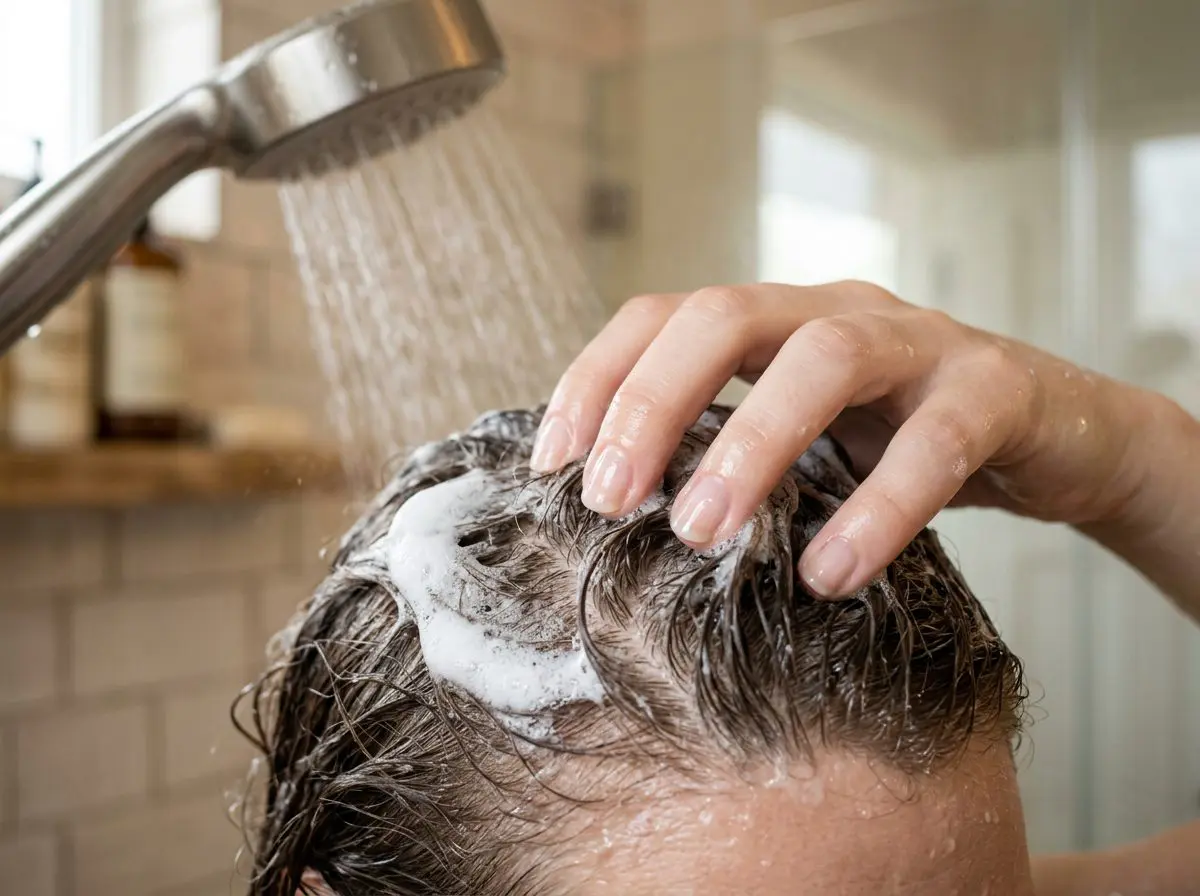
Step 1: Wet Hair Thoroughly
Use warm water, not hot. Hot water irritates an inflamed scalp.
Step 2: Lather the Bar
- Rub the bar between wet hands to build foam
- Or glide it gently over the scalp, without pressing
Step 3: Massage Gently
- Focus on the roots, hairline and crown
- Use your fingertips, never your nails
- Massage for 60–90 seconds to loosen build-up
Step 4: Rinse Well, Then Rinse With ACV
- Rinse longer than you think you need to
- Finish with the apple cider vinegar rinse: 1 tablespoon in 250 ml water
- In soft water you may need it only now and then. In hard water, use it every wash.
Step 5: Condition Only the Lengths
- Keep conditioner off the scalp
- Apply from ear level down, then rinse
Step 6: Dry the Scalp
- A damp scalp under a hat or pillow stays warm and humid
- Air-dry or blow-dry on a cool setting
How Often?
- Oily, acne-prone scalp: daily or every other day
- Normal scalp: 2–3 times a week
More detail in our guide to using shampoo bars and our ACV rinse guide.
Hard Water and an Acne-Prone Scalp
Hard water carries calcium and magnesium. Soap reacts with these minerals, and the reaction can leave a thin film on hair and scalp. Left in place, that film adds to build-up.
The fix is simple. Finish every wash with the ACV rinse. The acid dissolves the film and leaves the scalp clean. Not sure how hard your water is? Your local water company publishes it, usually on its website. Our hard water guide explains the rest.
Habits That Help
Clean Your Brushes and Combs Weekly
- They collect oil, skin cells and product
- Wash them in warm, soapy water
Change Pillowcases Often
- Oil and product transfer from the pillow back to your scalp
- Twice a week is a good rhythm
Hands Off
- Do not scratch or pick. It spreads the problem and slows healing.
Go Easy on Styling Products
- Hairspray, gel and mousse add build-up
- If you use them, keep them on the lengths, away from the roots
Wash After Sweating
- After sport or a day under a helmet, wash or at least rinse your scalp
Choosing a Shampoo Bar for an Acne-Prone Scalp
By Scalp Type
- Oily: a bar with charcoal or clay, washed often, with an ACV rinse
- Sensitive: a short ingredient list, no synthetic fragrance
- Oily roots, dry ends: wash the roots, condition only the ends
By Water Hardness
- Hard water: a soap bar plus an ACV rinse every wash, or a detergent bar if you want no rinse step
- Soft water: a soap bar works well on its own; rinse now and then
What to Check on the Label
- A full ingredient list, with no vague “fragrance” catch-all
- An honest pH: a soap maker should say around 9–10 and explain the acid rinse
- Palm oil-free means no palm oil at all, not “sustainable palm”
What to Expect
Weeks 1–4: Adjustment
- Coming from liquid shampoo, your scalp needs about 2–4 weeks to settle its oil production
- Hair can feel a little waxy or oily in this phase. That is normal.
- A weekly ACV rinse shortens it
After the First Month
- Most people find their routine and their scalp settles
- Keep the habits above. They matter as much as the bar.
Be patient, and be realistic. A shampoo bar keeps the scalp clean. It is not a medicine. If spots are painful, deep or keep coming back, see a doctor or dermatologist.
Our Own Bars, Honestly
Natural Answer is our own brand, so read this section as an interested opinion. The ingredient lists are on every product page, so you can check every word.
- Cold-process soap, pH 9–10
- Six certified-organic plant oils saponified with lye: coconut, sesame, sunflower, olive and castor oil, plus shea butter
- No synthetic surfactants, no silicones, no synthetic fragrance
- No palm oil, no plastic packaging, vegan, handmade
For an oily or acne-prone scalp, people often pick our Activated Charcoal, Tea Tree & Rosemary bar. It is the same soap base with tea tree oil, rosemary oil and activated charcoal added.
What we will not do: promise to cure acne. We make soap, not medicine. Use it with the ACV rinse in hard water, give your scalp 2–4 weeks to adjust, and judge for yourself.
FAQs
Q: Can a shampoo bar cause scalp acne?
A: Any product can disagree with a particular scalp. If things get worse after the adjustment phase, stop and try something else. Build-up from silicones and styling products is a more common culprit than the shampoo itself.
Q: How long until I see a difference?
A: Give it at least 4 weeks. The first 2–4 weeks are the scalp adjusting after liquid shampoo.
Q: Should I use conditioner if I have scalp acne?
A: Yes, but only on the lengths and ends. Keep it off the scalp.
Q: Will a shampoo bar help severe or cystic scalp acne?
A: Severe acne needs a doctor or dermatologist. A clean scalp supports their treatment. It does not replace it.
Q: Can I use a shampoo bar alongside a prescribed treatment?
A: Ask the doctor who prescribed it. Some treatments come with their own washing instructions.
Q: Do I need the ACV rinse every wash?
A: In hard water, yes. In soft water, now and then is often enough. Use it whenever your hair feels rough or looks dull.
Q: Soap is alkaline. Is that bad for an acne-prone scalp?
A: Soap’s alkalinity is why the acid rinse belongs in the routine. Wash with soap, rinse with ACV, and the pH comes back down.
Final Thoughts
Scalp acne is not a personal failing. Products, water, hormones and habits all play a part.
The part a shampoo bar handles is a clean scalp with nothing left behind. A cold-process soap bar does that with plant oils and lye. An ACV rinse finishes the job in hard water. Add the habits above, give it a month, and see how your scalp responds.
Ready to Try Real Soap?
Our cold-process shampoo bars are made with six organic plant oils and nothing synthetic. Every product page lists the full ingredients.
Resources: