


Last updated: October 5, 2026
Wavy hair sits in that beautiful in-between—not quite straight, not quite curly. It’s versatile, textured, and full of movement when treated right. But it’s also prone to frizz, loses definition easily, and can look limp if weighed down.
If you’re switching to shampoo bars for your wavy hair, you’re probably wondering: Will this work for my wave pattern? Will it enhance my waves or flatten them?
This guide will help you find the best shampoo bar for your specific wavy hair needs, whether you have loose 2A waves or defined 2C spirals.
—
Understanding Wavy Hair Before Choosing Shampoo Bars for Wavy Hair
What Makes Wavy Hair Unique?
Wavy hair (Type 2) falls between straight (Type 1) and curly (Type 3) on the hair type spectrum:
- Type 2A: Fine, loose S-shaped waves. Prone to flatness, oiliness at roots.
- Type 2B: Medium texture with more defined S-waves. Frizz-prone, needs moisture balance.
- Type 2C: Thicker waves bordering on curly. Defined spirals, prone to frizz and dryness.
Common Challenges:
1. Frizz (especially in humidity)
2. Loss of definition (waves straighten out between washes)
3. Weight sensitivity (heavy products flatten waves)
4. Root oiliness + dry ends (combination texture)
5. Hard water buildup (makes waves stringy and undefined)
—
Why Shampoo Bars for Wavy Hair Can Transform Your Pattern
1. Lightweight Cleansing (Won’t Weigh Down Waves)
Liquid shampoos often contain heavy silicones, sulfates, and fillers that:
- Coat the hair shaft
- Weigh down delicate wave patterns
- Create flat, greasy roots
Shampoo bars are concentrated and often formulated without these heavy additives, giving wavy hair:
- Natural volume at the roots
- Bouncy, defined waves
- Clean hair that holds its pattern longer
2. Hard Water Protection (The Secret to Defined Waves)

If you live in a hard water area, mineral buildup is the #1 wave killer:
- Calcium and magnesium cling to hair shafts
- Waves lose definition and look stringy
- Hair feels coated, products don’t absorb
- Frizz increases dramatically
Solution: Cold-process soap bars (like Natural Answer’s bars) used with an acidic ACV rinse (1 tbsp in 1 cup water) help to:
- Dissolve and remove mineral deposits
- Restore wave definition
- Allow moisture to penetrate properly
- Reduce frizz and buildup
3. Gentle Cleansing (Kind to Delicate Waves)
Wavy hair is often more delicate than straight hair but more robust than curly. It needs gentle cleansing that doesn’t strip natural oils:
- Avoid: Harsh sulfates (SLS, SLES) that create excessive foam and dryness
- Choose: Mild surfactants (saponified plant oils, decyl glucoside)
- Look for: Nourishing oils (coconut, jojoba, argan) that enhance waves without heaviness
—
Best Characteristics of Shampoo Bars for Wavy Hair
When choosing a shampoo bar for wavy hair, prioritize these features:
1. Gentle Surfactants (Not Harsh Sulfates)
- Good: saponified plant oils, Decyl Glucoside, Coco Glucoside
- Avoid: Sodium Lauryl Sulfate (SLS), Sodium Laureth Sulfate (SLES)
Why it matters: Gentle cleansing preserves natural oils, prevents frizz, maintains wave definition.
2. Lightweight Moisture (Not Heavy Oils)
- Good for waves: Jojoba oil, argan oil, grapeseed oil
- Too heavy for most wavy hair: Castor oil, shea butter (in high amounts)
Pro tip: Type 2A and 2B waves need lighter formulas than 2C waves.
3. Hard Water Care (If You Have Mineral-Heavy Water)
- Look for: vinegar, citric acid or sodium citrate
- Why: Removes mineral buildup that makes waves limp and stringy
Test your water: If your kettle has limescale or soap doesn’t lather well, you have hard water.
4. pH compatibility for wavy hair
Wavy hair’s cuticle needs to stay smooth to reflect light and maintain definition:
- Too alkaline (pH 7+): Cuticle opens, waves look frizzy and dull
- Properly acidic (pH 4.5-5.5): Cuticle closes, waves shine and hold shape — syndet bars achieve this directly; cold-process soap bars (pH 9–10) work the same way with an ACV rinse afterwards
5. Free from Silicones
Silicones (dimethicone, cyclomethicone) coat hair, temporarily smoothing frizz but:
- Build up over time
- Require harsh sulfates to remove
- Flatten wave pattern
- Prevent moisture absorption
Shampoo bars are typically silicone-free, making them ideal for wavy hair.
—
Top Natural Answer Shampoo Bars for Wavy Hair
For Type 2A (Fine, Loose Waves)
Best Choice: Natural Answer Classic Bar
Why it works:
- Lightweight formula won’t weigh down fine waves
- Gentle cleansing preserves natural texture
- Hard water protection keeps waves defined
- No heavy oils or butters
What to expect:
- Bouncy, natural volume
- Clean roots without oiliness
- Waves that last 2-3 days between washes
—
For Type 2B (Medium, Defined Waves)
Best Choice: Natural Answer Moisturizing Bar
Why it works:
- Balanced moisture for medium-texture hair
- Enhances wave definition without heaviness
- Fights frizz in humidity
- Hard water protection prevents stringiness
What to expect:
- Soft, defined S-waves
- Reduced frizz
- Healthy shine without greasiness
—
For Type 2C (Thick, Springy Waves)
Best Choice: Natural Answer Extra Moisture Bar
Why it works:
- Richer formula for thicker wave patterns
- Deep cleansing without stripping
- Nourishes coarser hair texture
- Maintains definition in high-density hair
What to expect:
- Defined, bouncy waves
- Less frizz and flyaways
- Soft, manageable texture
—
How to Use Shampoo Bars for Wavy Hair (Wave-Enhancing Technique)
The way you use your shampoo bar matters just as much as which bar you choose:
Step 1: Thoroughly Wet Hair (2-3 Minutes)
- Why: Shampoo bars need water to activate
- For waves: Warm water opens the cuticle, allowing product to penetrate
- Hard water tip: If you have hard water, wetting for longer helps counteract mineral resistance
Step 2: Create Lather in Hands (Not Directly on Hair)
- Rub the bar between wet hands until you create a rich lather
- For wavy hair: Apply lather to roots first, then work through lengths
Why not apply directly? Direct application can create uneven product distribution, leaving some sections over-cleansed and others under-cleansed.
Step 3: Massage Scalp (Focus on Roots)
- Use fingertips (not nails) to massage scalp in circular motions
- Focus on the roots where oil accumulates
- Wave tip: Don’t scrub lengths aggressively—this creates frizz
Step 4: Let Lather Run Through Lengths
- As you rinse, the lather naturally cleanses the lengths
- For wavy hair: Gently squeeze through waves, don’t rough up the cuticle
Step 5: Rinse Thoroughly (Extra Important for Waves)
- Rinse for 2-3 minutes minimum
- Wave definition secret: Ensure no residue remains—leftover product weighs down waves
- Cold water finish: Final cold rinse closes the cuticle, enhancing definition and shine
Step 6: Condition (Focus on Lengths, Not Roots)
- Apply conditioner (or conditioner bar) from mid-lengths to ends
- Wave technique: Scrunch conditioner into waves to encourage definition
- Avoid roots to prevent flatness
Step 7: Plop or Scrunch Dry (Don’t Towel-Rub)
- Gently squeeze excess water with a microfiber towel or cotton T-shirt
- Wave-enhancing method: “Scrunch” waves upward while drying
- Avoid: Vigorous towel-rubbing (destroys wave pattern and creates frizz)
—
Hard Water & Wavy Hair: The Connection
If your waves have gone from defined to stringy, hard water is likely the culprit.
How Hard Water Ruins Wave Definition
1. Mineral deposits coat hair shafts
- Calcium and magnesium bind to hair
- Hair feels rough, stiff, and coated
- Waves lose their natural bend and look limp
2. Products don’t work anymore
- Stylers sit on top of buildup instead of absorbing
- Hair feels greasy but dry at the same time
- No amount of product restores definition
3. Frizz increases dramatically
- Mineral-coated hair is rough and porous
- Cuticle doesn’t lie flat
- Humidity makes frizz worse
Solution: Cold-Process Soap Plus an ACV Rinse
Natural Answer shampoo bars pair cold-process soap with an ACV rinse to remove hard water buildup:
- Cold-process soap, made from saponified plant oils, cleanses without stripping
- An acidic ACV rinse dissolves minerals, closes the cuticle, and restores shine
Result: Waves bounce back, frizz decreases, products work again.
—
Wavy Hair Mistakes (That Shampoo Bars Help You Avoid)
Mistake #1: Using Heavy, Silicone-Laden Products
The problem: Silicones temporarily smooth hair but build up over time, requiring harsh sulfates to remove. This cycle damages wavy hair.
Shampoo bar solution: Most bars are silicone-free and don’t require harsh cleansing.
Mistake #2: Over-Washing (Stripping Natural Oils)
The problem: Wavy hair needs its natural oils for definition and shine. Over-washing creates dry, frizzy waves.
Shampoo bar solution: Concentrated formulas last longer, encouraging less frequent washing (2-3x per week ideal for wavy hair).
Mistake #3: Ignoring Hard Water Buildup
The problem: Even the best products won’t work if mineral buildup is present.
Shampoo bar solution: Hard water-specific bars remove buildup, restoring wave pattern.
Mistake #4: Using the Wrong pH
The problem: Alkaline products (pH 7+) open the cuticle if you skip the acidic step, creating frizz and dullness.
Shampoo bar solution: Cold-process soap bars (pH 9–10) are alkaline, so follow with an ACV rinse (1 tbsp in 1 cup water) to close the cuticle and keep it smooth.
Mistake #5: Skipping Conditioner
The problem: Wavy hair needs moisture to maintain elasticity and definition.
Shampoo bar solution: Pair your bar with a conditioner or conditioner bar. Focus on lengths and ends, not roots.
—
Transition Period: What to Expect When Switching to Shampoo Bars
If you’re coming from conventional shampoos, your wavy hair may go through a short adjustment:
Week 1-2: Possible Waxiness or Flatness
Why: Your hair is detoxing from silicones and sulfates. Natural oils are rebalancing.
What to do:
- Rinse more thoroughly (spend an extra minute)
- Use an apple cider vinegar rinse (1:4 ratio with water) once per week
- Be patient—this is temporary
Week 3-4: Texture Improves
Why: Buildup is gone, natural oils are balanced, waves start to bounce back.
What to expect:
- More defined wave pattern
- Less frizz
- Natural shine returns
Week 5+: Full Results
Why: Your hair has fully adjusted to the new routine.
What to expect:
- Best wave definition of your life
- Longer-lasting clean hair
- Reduced need for styling products
—
Wavy Hair Routine with Shampoo Bars for Wavy Hair
Weekly Routine
Wash Days (2-3x per week):
1. Wet hair thoroughly (2-3 minutes)
2. Lather shampoo bar in hands
3. Massage into scalp and roots
4. Rinse thoroughly (2-3 minutes)
5. Condition lengths (avoid roots)
6. Final cold rinse
7. Scrunch dry with microfiber towel
8. Air dry or diffuse on low heat
Non-Wash Days:
- Refresh waves with water + leave-in spray
- Avoid touching hair (oils from hands cause frizz)
- Sleep on silk/satin pillowcase to preserve waves
Monthly Deep Care
Clarifying Treatment (for hard water areas):
- Apple cider vinegar rinse (1:4 with water)
- Apply after shampooing, rinse after 2 minutes
- Restores pH, removes stubborn buildup
Deep Conditioning (for drier 2C waves):
- Weekly conditioning mask (focus on lengths)
- Leave on 10-15 minutes before rinsing
- Maintains moisture balance
—
Best Complementary Products for Wavy Hair
To maximize your shampoo bar results:
1. Conditioner or Conditioner Bar
- Apply to lengths and ends (not roots)
- Look for lightweight formulas for 2A/2B, richer for 2C
- Natural Answer Conditioner Bar pairs perfectly with the shampoo bar
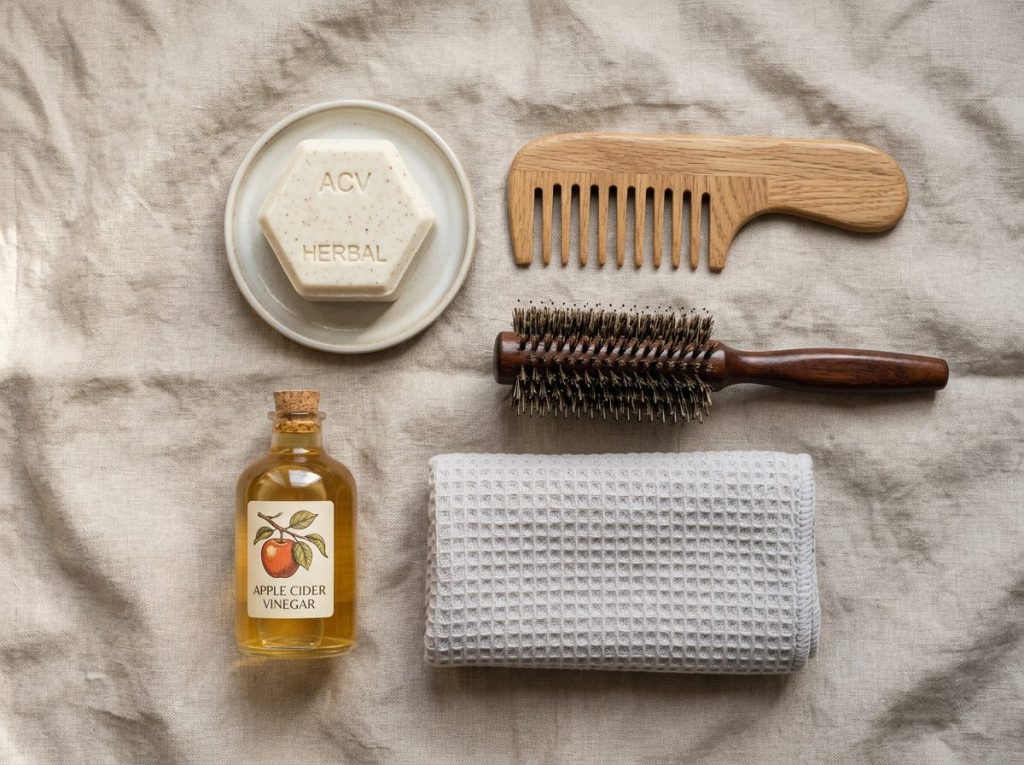
2. Wide-Tooth Comb
- Detangle when hair is wet and conditioned
- Prevents breakage and frizz
- Wave tip: Comb gently from ends upward
3. Microfiber Towel or Cotton T-Shirt
- Absorbs water without roughing up the cuticle
- Regular towels create frizz and disrupt wave pattern
4. Apple Cider Vinegar
- Monthly clarifying rinse
- Restores pH, removes buildup
- Enhances shine and definition
5. Silk or Satin Pillowcase
- Reduces friction while sleeping
- Preserves wave definition overnight
- Minimizes frizz and tangling
—
Frequently Asked Questions
Will shampoo bars work on my wavy hair type?
Yes! Shampoo bars work on all wavy hair types (2A, 2B, 2C). Choose a lightweight formula for fine waves or a more moisturizing bar for thicker, coarser waves.
Do shampoo bars enhance or flatten wave definition?
Enhance. Quality shampoo bars are lightweight and free from heavy silicones, allowing your natural wave pattern to spring back. Hard water-specific bars remove buildup that flattens waves.
How often should I wash wavy hair with a shampoo bar?
2-3 times per week is ideal for most wavy hair. Over-washing strips natural oils that enhance definition. Under-washing can lead to buildup and flat roots.
Will a shampoo bar make my wavy hair frizzy?
No—the opposite. Frizz is often caused by:
- Harsh sulfates stripping natural oils
- Silicone buildup preventing moisture absorption
- Hard water mineral deposits roughing up the cuticle
Shampoo bars address all three issues, reducing frizz over time.
Can I use a shampoo bar if I have color-treated wavy hair?
Yes. Sulfate-free shampoo bars are gentler on color than conventional shampoos. Look for bars without harsh detergents and consider a moisturizing formula to protect color.
How long does a shampoo bar last for wavy hair?
2-3 months on average, depending on:
- Hair length
- Wash frequency (2-3x per week for wavy hair)
- Proper storage (keep dry between uses)
My waves look stringy—is the shampoo bar not working?
Possible causes:
1. Hard water buildup – Try an apple cider vinegar rinse
2. Not rinsing thoroughly enough – Spend 2-3 minutes rinsing
3. Still in transition period – Give it 3-4 weeks
4. Need a conditioner – Wavy hair needs moisture on lengths
Should I use a conditioner with my shampoo bar?
Yes, for most wavy hair. Apply conditioner from mid-lengths to ends (avoid roots to prevent flatness). Type 2A waves may need lighter conditioners, while 2C waves benefit from richer formulas.
Can shampoo bars help with wavy hair volume?
Yes! By removing silicone buildup and hard water deposits, shampoo bars restore natural volume at the roots. Wavy hair often appears fuller and bouncier after switching to bars.
Will my wavy hair go through a transition period?
Possibly. If you’ve been using silicone-heavy products, your hair may need 2-4 weeks to adjust. During this time:
- Rinse more thoroughly
- Use an apple cider vinegar rinse weekly
- Be patient—results improve with time
—
Final Thoughts: Why Shampoo Bars for Wavy Hair Are Ideal
Wavy hair thrives on balance—not too heavy, not too stripping, just right. Shampoo bars offer:
1. Lightweight cleansing that doesn’t weigh down waves
2. Hard water protection that restores definition
3. Gentle ingredients that enhance natural texture
4. Sustainable choice (50-80 washes per bar, plastic-free)
5. Cost-effective (€10-15 lasts 2-3 months)
The Natural Answer Difference:
Our bars are specifically formulated for European hard water, making them ideal for wavy hair prone to mineral buildup. We use:
- Gentle, sulfate-free cleansing
- Cold-process soap base (pH 9–10) — follow with an ACV rinse to seal cuticles
- An ACV rinse (1 tbsp in 1 cup water) for hard water
- Lightweight moisturizers that enhance waves without weighing them down
- Handmade in small batches
- Palm oil-free, vegan, cruelty-free
—
Ready to Enhance Your Waves?
Try Natural Answer Shampoo Bars risk-free:
- Choose the right formula for your wave type (2A/2B/2C)
- Follow our wave-enhancing technique
- Give it 3-4 weeks to see full results
- Enjoy defined, bouncy, frizz-free waves
Order now and discover why thousands of wavy-haired users have made the switch.
—
Internal Links:
- How to Use Shampoo Bars: Complete Guide
- Shampoo Bars for Hard Water: Complete Guide
- Best Shampoo Bars for Curly Hair
- Shampoo Bar Transition Period: What to Expect
- Are Shampoo Bars Good for Your Hair?
Product Links:
- Natural Answer Lemongrass Bar (for 2A fine waves)
- Natural Answer Lavender & White Kaolin Bar (for 2B medium waves)
- Natural Answer Rose, Jasmin & Lavender Conditioner (extra moisture for 2C thick waves)
—
Last updated: February 2026