


Last updated: October 6, 2026
Switching to shampoo bars should make your hair cleaner and healthier — not greasy and limp. But if you’re struggling with oily, waxy buildup after making the switch, you’re not alone.
The good news? Greasy hair from shampoo bars is almost always fixable. The bad news? It might take some detective work to figure out what’s causing it.
In this guide, we’ll walk through the 7 most common causes of greasy hair after switching to shampoo bars — and exactly how to fix each one.
Why You Get Greasy Hair After Shampoo Bars
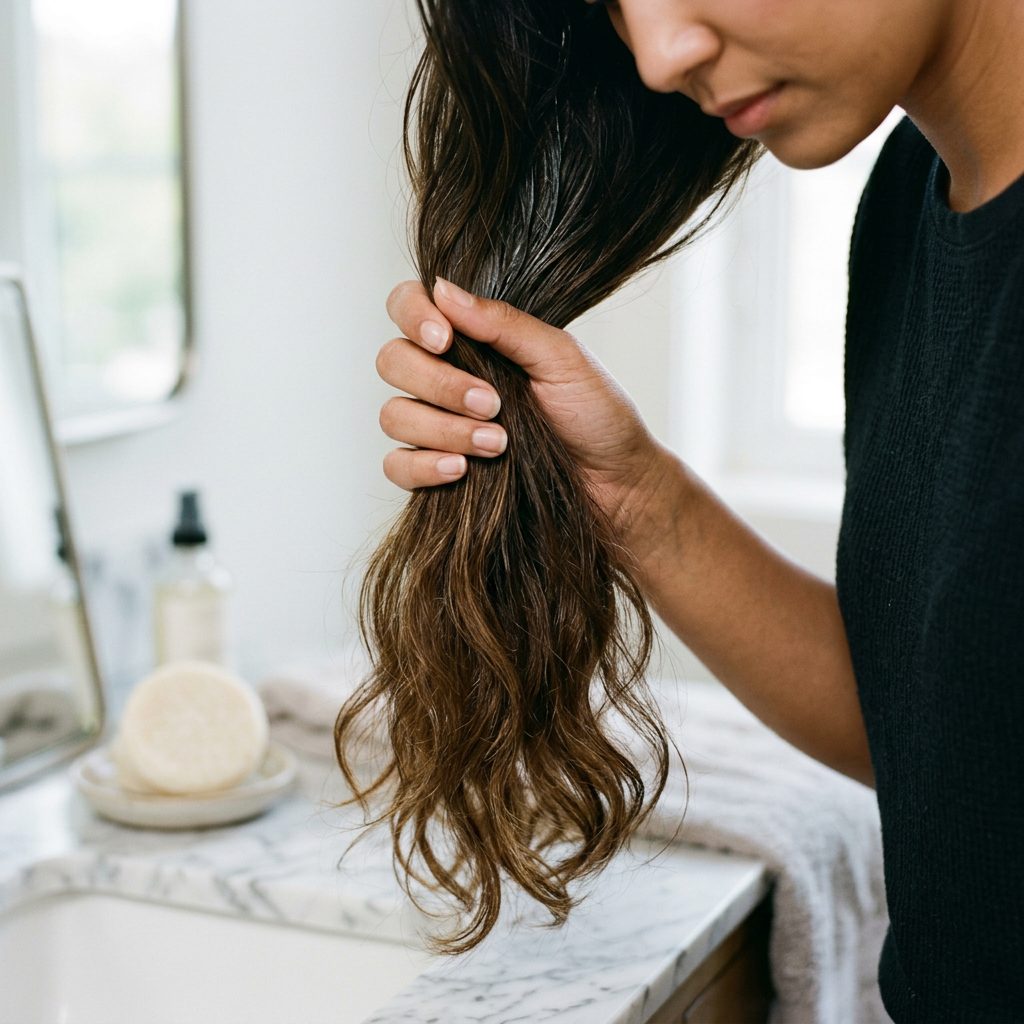
Greasy, waxy, or “sticky” hair after switching to a shampoo bar usually happens for one of these reasons:
- Hard water buildup (most common)
- Transition period (your scalp is still adjusting)
- Wrong shampoo bar type (soap-based vs detergent-based)
- Not rinsing thoroughly
- Using too much product
- Conditioner or styling product buildup
- Scalp overproducing oil (rebound effect)
Let’s break down each cause — and how to solve it.
1. Hard Water Buildup (The #1 Culprit)
What’s Happening
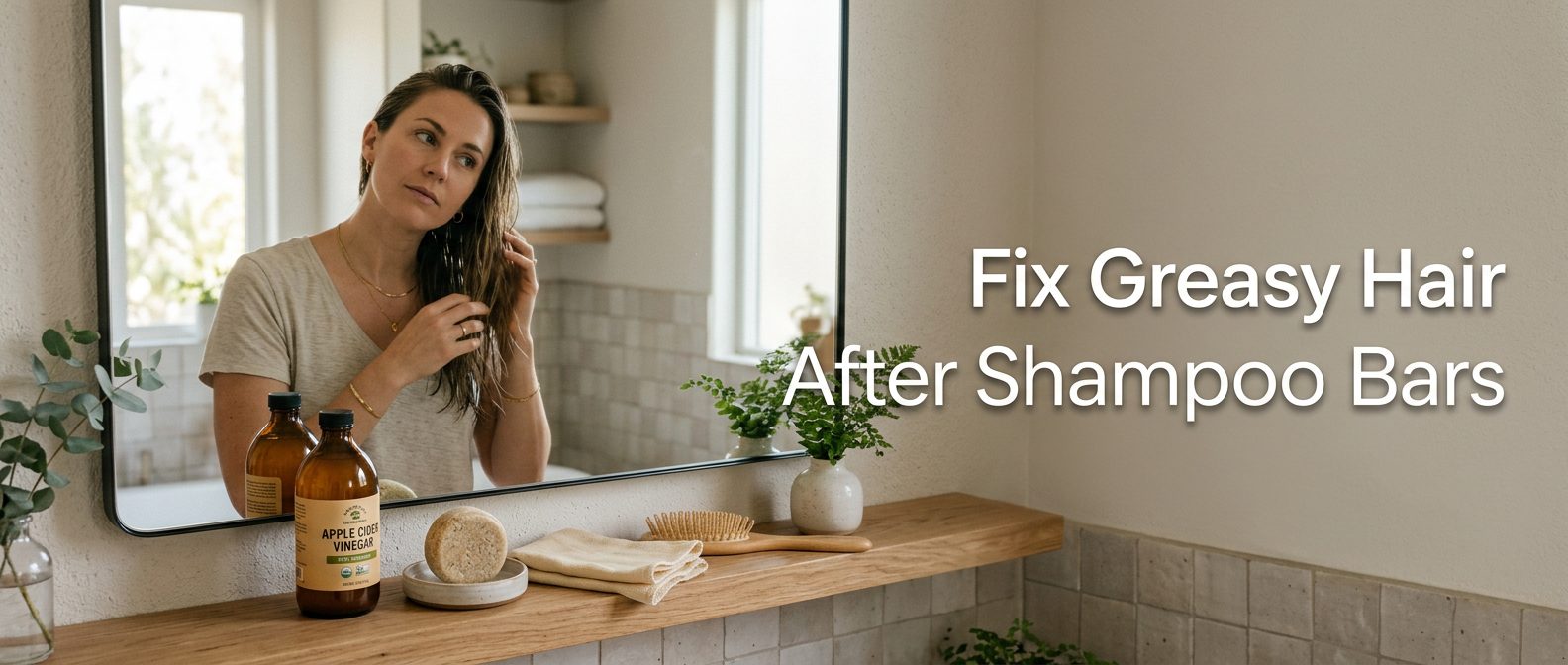
If you have hard water (high mineral content), those minerals can react with natural soap-based shampoo bars to create “soap scum” — the same stuff that leaves a ring around your bathtub.
When soap scum forms on your hair, it creates a waxy, greasy coating that’s nearly impossible to rinse out with water alone.
Signs it’s hard water: – Hair feels waxy or sticky even after rinsing – Buildup gets worse over time – Your shower has white mineral deposits or film – Shampoo doesn’t lather well
How to Fix It
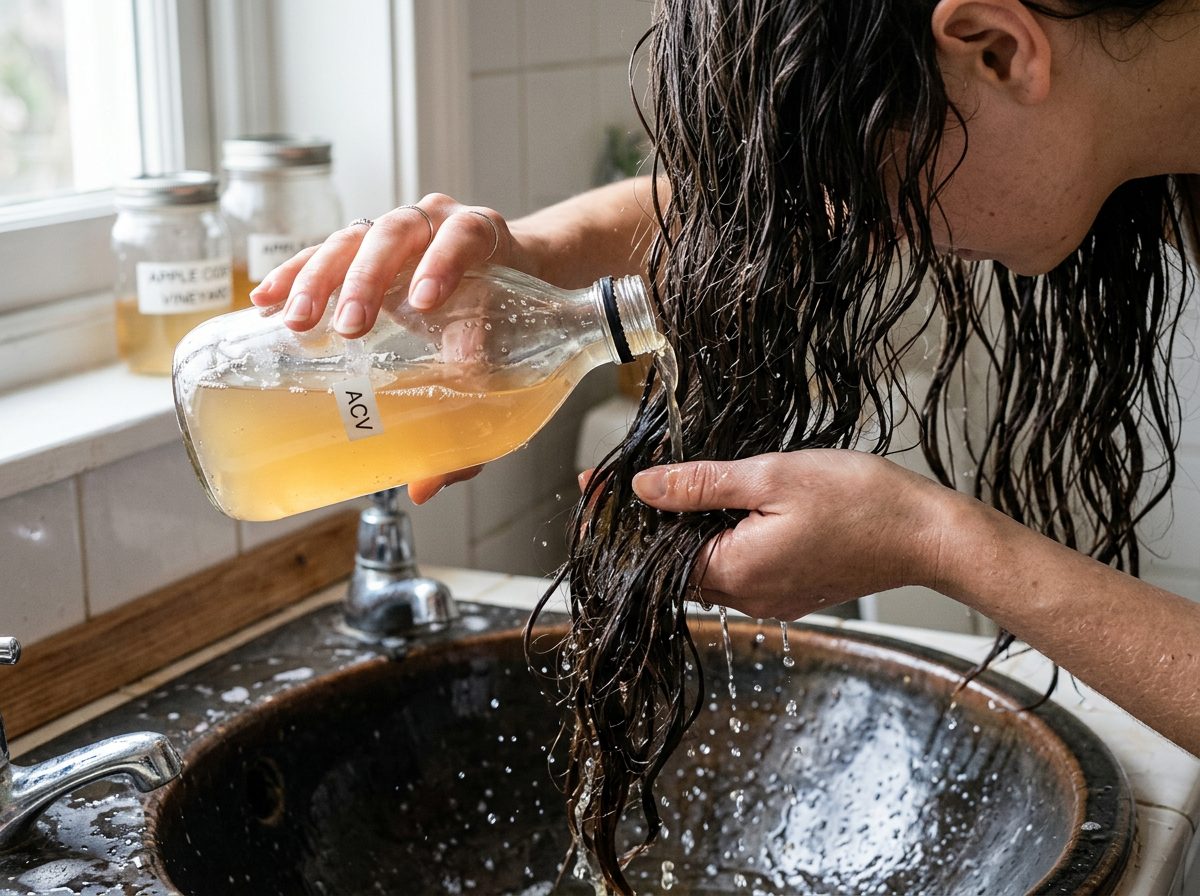
Option 1: Use an Apple Cider Vinegar Rinse
An ACV rinse dissolves mineral buildup and restores shine.
How to do it: 1. Mix 1-2 tablespoons of apple cider vinegar with 1 cup of water 2. After shampooing, pour the mixture over your hair 3. Let it sit for 1-2 minutes 4. Rinse thoroughly with cool water
Use this 1-2 times per week until buildup is gone, then as needed for maintenance.
Option 2: Install a Shower Filter
A shower filter removes minerals from your water before they ever touch your hair. Look for filters that specifically target calcium and magnesium.
Option 3: Switch to a Detergent-based-Based Shampoo Bar
Detergent-based (synthetic detergent) shampoo bars don’t react with hard water the same way soap-based bars do. Brands like Lush, Ethique, and HiBAR make detergent bars.
Option 4: Use Distilled Water for Rinsing
For a quick fix, rinse your hair with distilled or filtered water after shampooing. Keep a jug in your shower for final rinses.
Learn more: Shampoo Bars for Hard Water: Complete Guide
2. Transition Period (Your Scalp Needs Time)
What’s Happening
If you’ve been using liquid shampoos (especially sulfate-heavy ones) for years, your scalp might be overproducing oil to compensate for being stripped daily.
When you switch to a gentler shampoo bar, your scalp can take 1-4 weeks to adjust and “relearn” its natural oil balance.
Signs it’s the transition period: – You just started using a shampoo bar (within the last 2-4 weeks) – Hair is greasier than usual, but not waxy or sticky – Roots feel oily but ends feel fine
How to Fix It
Be patient. The transition period is temporary — but it’s real.
During the adjustment: – Wash your hair more frequently if needed (daily is fine during transition) – Use dry shampoo between washes if necessary – Focus shampoo on your scalp/roots only – Rinse VERY thoroughly
Most people notice a significant improvement by week 2-3. By week 4-6, your scalp should have fully adjusted.
Learn more: Shampoo Bar Transition Period: What to Expect
3. Wrong Type of Shampoo Bar
What’s Happening
Not all shampoo bars are created equal. There are two main types:
- Soap-based bars (made from oils + lye, like traditional soap)
- Detergent bars (made from synthetic detergents, pH-balanced)
Soap-based bars work beautifully in soft water but can cause waxy buildup in hard water. Detergent bars need no rinse in hard water but are not 100% natural.
Signs you’re using the wrong type: – Greasy buildup that won’t rinse out (soap bar in hard water) – Hair feels squeaky clean but looks dull and greasy (wrong pH balance)
How to Fix It
If you have hard water: Switch to a detergent bar-based shampoo bar or use an ACV rinse with your current soap-based bar.
If you have soft water: Soap-based bars should work beautifully. If they don’t, try a different formulation (some oils create more buildup than others).
How to tell what type of bar you have: – Check the ingredients: If it lists “sodium cocoate,” “sodium olivate,” or “saponified oils,” it’s soap-based – If it lists “Sodium Cocoyl Isethionate (SCI)” or “Sodium Lauryl Sulfoacetate (SLSa),” it’s detergent-based
Learn more: Shampoo Bars vs Shampoo Soap: What’s the Difference?
4. Not Rinsing Thoroughly
What’s Happening
Shampoo bars are concentrated. If you don’t rinse thoroughly, product residue stays on your hair — making it look greasy and feel heavy.
This is especially common if you: – Have thick or long hair – Live in an area with low water pressure – Rinse quickly to save water
Signs it’s a rinsing issue: – Hair feels slippery or soapy after you think you’re done rinsing – Buildup is worse near your scalp or at the nape of your neck – Hair looks greasy when wet but dries better
How to Fix It
Rinse longer than you think you need to.
A good rule of thumb: When you think you’re done rinsing, rinse for another 30-60 seconds.
Tips for thorough rinsing: – Use warm (not hot) water to open cuticles and release product – Tilt your head in different directions to reach all angles – Run your fingers through your hair as you rinse to loosen product – Finish with a cool water rinse to seal cuticles and add shine
If you have long or thick hair, section it while rinsing to make sure water reaches every strand.
5. Using Too Much Product
What’s Happening
A little shampoo bar goes a LONG way. If you’re applying too much product, it can leave residue that looks and feels greasy.
Signs you’re using too much: – Your shampoo bar is shrinking very fast (lasting <3 weeks) – Hair feels coated or heavy – You see visible white residue after drying
How to Fix It
Use less bar.
For most hair types: – Wet your hair thoroughly – Rub the bar directly on your scalp in a few spots (5-8 swipes total) – Set the bar down – Massage your scalp to create lather – Add more water (not more bar) if you need more lather
For long or thick hair: – Focus the bar on your scalp/roots only – Let the lather rinse through your lengths – Don’t rub the bar down the length of your hair unless your ends are also oily
Learn more: How to Use Shampoo Bars: Complete Guide
6. Conditioner or Styling Product Buildup
What’s Happening
Sometimes the greasiness isn’t from your shampoo bar at all — it’s from conditioner, leave-in products, or styling products that haven’t been fully rinsed out or that are too heavy for your hair type.
Signs it’s product buildup: – Hair is greasy at the ends but clean at the roots – You use leave-in conditioner, oils, or heavy styling products – Hair looks great right after washing but gets greasy quickly
How to Fix It
Do a clarifying wash: 1. Use a small amount of baking soda mixed with water as a pre-wash (1 tsp baking soda + 1 cup water) 2. Apply to wet hair, massage, rinse thoroughly 3. Follow with your regular shampoo bar 4. Skip conditioner or use very sparingly (just on ends)
Going forward: – Use less conditioner (or skip it if your hair doesn’t need it) – Only apply conditioner to the bottom 1/3 of your hair (never the roots) – Rinse conditioner VERY thoroughly – Avoid silicone-based products (they coat hair and repel water)
For fine or oily hair: You might not need conditioner at all. Try skipping it for a few washes to see if that fixes the greasiness.
7. Scalp Overproducing Oil (Rebound Effect)
What’s Happening
If you’ve been washing your hair daily with harsh sulfate shampoos, your scalp might have learned to overproduce oil to protect itself.
When you switch to a gentler shampoo bar, your scalp can take weeks to “calm down” and stop producing excess oil.
Signs it’s overproduction: – Roots get very oily within 12-24 hours – You’ve been washing daily for months or years – Your scalp feels oily but your hair shafts are actually dry
How to Fix It
Gradually extend time between washes.
It sounds counterintuitive, but training your scalp to produce less oil means washing less often.
How to do it: – Week 1: Wash every other day (use dry shampoo if needed) – Week 2: Wash every 2-3 days – Week 3+: Wash 2-3 times per week
Your scalp will eventually recalibrate. Most people notice a major improvement within 3-4 weeks.
During the adjustment: – Use dry shampoo to absorb oil between washes – Wear your hair in updos or braids on “greasy” days – Focus shampoo on your scalp (not your lengths)
Quick Troubleshooting: Greasy Hair After Shampoo Bars
If your hair feels waxy or sticky: → Hard water buildup. Use an ACV rinse or switch to a detergent bar bar.
If your hair is greasy but not waxy: → Transition period, overproduction, or too much product. Give it time and wash less often.
If your hair looks greasy when wet but fine when dry: → Not rinsing thoroughly. Rinse longer.
If greasiness is worse at the ends than the roots: → Conditioner or product buildup. Use less conditioner.
If your scalp is oily but your hair is dry: → Overproduction. Train your scalp by washing less often.
If nothing is working: → You might need a different shampoo bar formulation. Try a detergent bar bar or a different oil blend.
Shampoo Bar Recommendations by Issue
For hard water: – Lavender & Kaolin Clay Bar — Kaolin clay absorbs minerals – Use with ACV rinse for best results
For oily scalp: – Tea Tree Shampoo Bar — Balances oil production – Charcoal Shampoo Bar — Detoxifies and clarifies
For transition period: – Banana & Coconut Bar — Gentle, moisturizing formula – Wash more frequently during adjustment
For fine/easily greasy hair: – Rosemary & Mint Bar — Lightweight, adds volume – Skip conditioner or use very sparingly
For damaged hair that looks greasy: – Shea Butter Shampoo Bar — Repairs without weighing down – Use ACV rinse to remove buildup and add shine
Final Tips for Preventing Greasy Hair After Shampoo Bars
- Always rinse with cool water at the end — seals cuticles and removes product
- Don’t touch your hair during the day — oils from your hands transfer to hair
- Wash your hairbrush weekly — dirty brushes redistribute oil and product
- Sleep on a silk or satin pillowcase — reduces oil transfer
- Avoid hot water — it strips natural oils and triggers overproduction
- Focus shampoo on your scalp only — lengths and ends don’t need as much cleansing
The Bottom Line on Greasy Hair After Shampoo Bars
Greasy hair after switching to shampoo bars is frustrating — but it’s almost always fixable.
The most common causes: 1. Hard water buildup (use ACV rinse) 2. Transition period (give it 2-4 weeks) 3. Not rinsing thoroughly (rinse longer)
If you’ve ruled out these three and you’re still struggling, try a different shampoo bar formulation or consult a trichologist to rule out underlying scalp conditions.
With a little troubleshooting, you’ll figure out what works for your hair — and enjoy the clean, healthy, plastic-free hair care you switched to shampoo bars for in the first place.
Ready to find the right bar? Shop all-natural shampoo bars →
Related Articles: – Common Shampoo Bar Mistakes (And How to Fix Them) – Shampoo Bar Transition Period: What to Expect – Why Does My Shampoo Bar Make My Hair Greasy? – Shampoo Bars for Hard Water: Complete Guide – Best Shampoo Bars for Oily Hair