


Last updated: August 19, 2026
Key takeaways
- Charcoal whitens by abrasion: it scrubs surface stains off, and with them, over time, microscopic amounts of enamel.
- Hydroxyapatite whitens by addition: it deposits white mineral into surface defects, smoothing and brightening enamel while strengthening it.
- A 2017 review in the Journal of the American Dental Association found insufficient evidence that charcoal dentifrices are either safe or effective.
- Thinned enamel eventually makes teeth look more yellow, because the darker dentine underneath shows through — the opposite of the goal.
- Neither approach bleaches. For stain-free, gradually brighter teeth with no enamel trade-off, hydroxyapatite is the safer daily choice.
Comparing hydroxyapatite vs charcoal toothpaste comes down to one mechanical difference: charcoal takes material off your teeth, hydroxyapatite puts material back on. For daily whitening, that makes hydroxyapatite the better and safer option — charcoal’s scrubbing action can genuinely lift surface stains, but it works by abrasion, and enamel doesn’t grow back.
Here’s how each one actually works, what the research says, and why we chose to sell one of them and not the other.
How charcoal “whitens”: abrasion
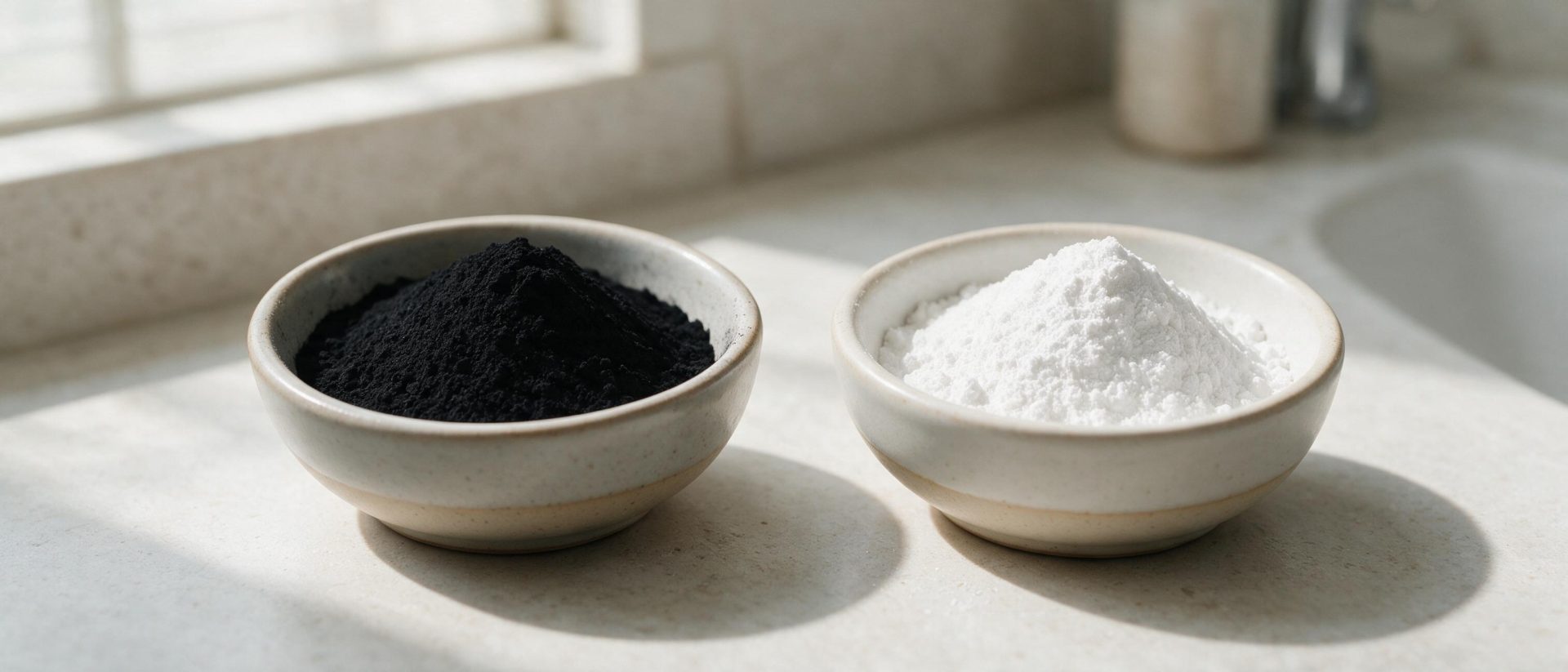
Activated charcoal is a porous carbon with a huge surface area. In a toothpaste or powder, it does two things: it adsorbs some compounds onto its surface, and — mostly — it scrubs. The gritty particles mechanically abrade the stained outer film on your teeth: coffee, tea, red wine, tobacco residue. Polish off the stained layer and teeth look brighter. Immediately, visibly — which is why the before/after photos are so persuasive.
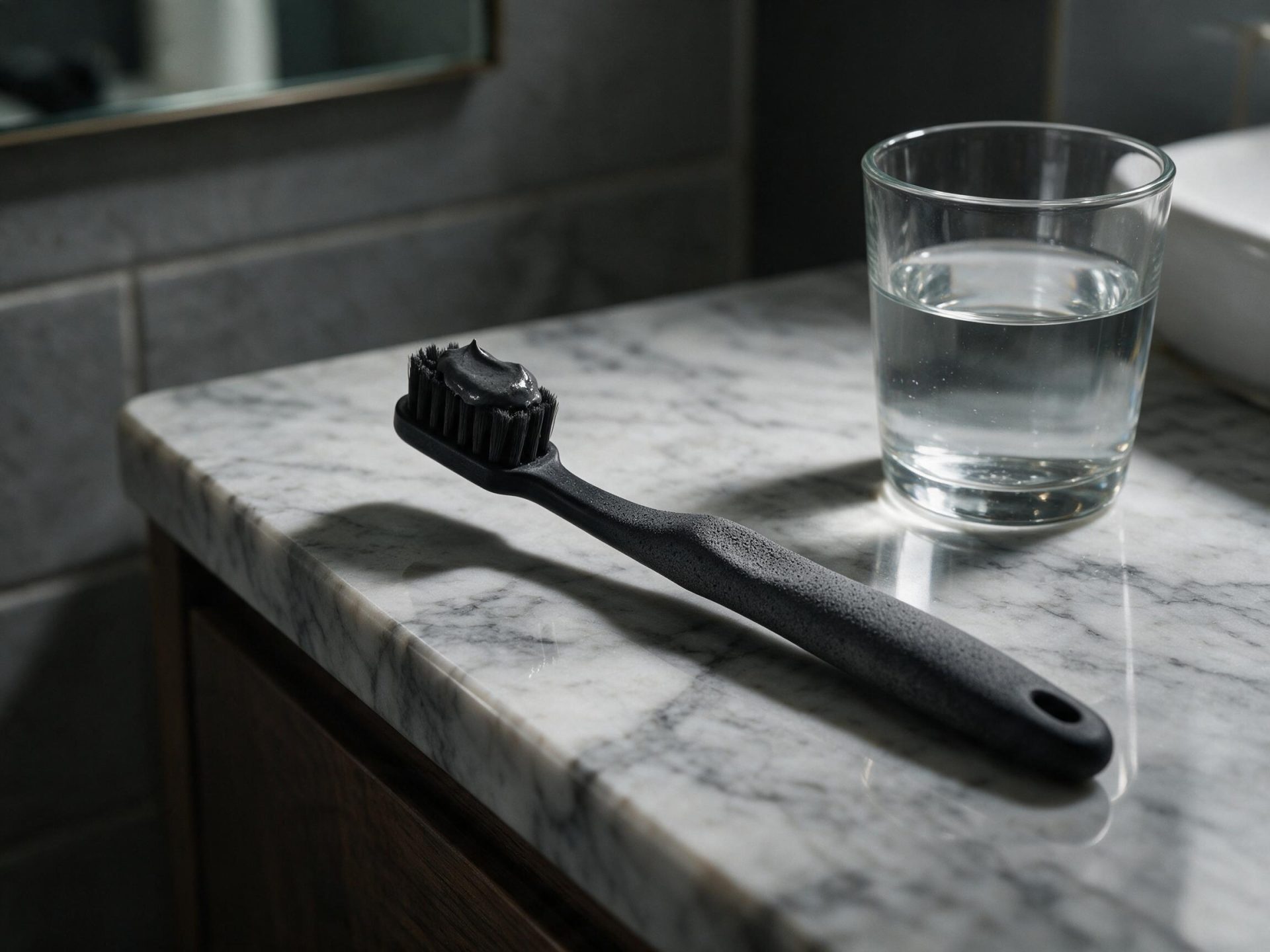
The problem is what else gets polished. Abrasivity varies widely between charcoal products, and the abrasive that removes stain from enamel does not know when to stop. Used daily for months, an aggressive charcoal powder can thin the enamel surface. Charcoal particles can also lodge in gum-line crevices and around the margins of fillings and crowns, sometimes leaving grey shadows — and charcoal binds indiscriminately, which is one reason it pairs poorly with active ingredients.
The evidence base reflects this. A 2017 systematic review in the Journal of the American Dental Association examined charcoal dentifrices and concluded there was insufficient evidence to substantiate either their safety or their whitening claims. That review is now several years old, and the picture hasn’t materially changed: charcoal whitening rests on marketing momentum more than dental research.
How hydroxyapatite whitens: remineralisation
Hydroxyapatite is the mineral your enamel is made of — white, crystalline calcium phosphate. Instead of scraping the surface, HAP particles bind to it, filling microscopic pits and porosities where stains anchor and light scatters. The result works on two levels:
- Optical: a smoother, denser enamel surface reflects light more evenly, so teeth look glossier and whiter. The deposited mineral itself is naturally white.
- Structural: the same process that brightens is remineralisation — it hardens softened enamel and makes the surface more resistant to new stains taking hold.
The trade-off is honesty about pace: HAP whitening is gradual. Expect subtle brightening over 4–8 weeks of daily use, not a dramatic before/after in a week. And like charcoal, HAP does not bleach — neither touches the intrinsic colour of dentine the way peroxide treatments do. We’ve covered the whitening evidence in detail in Does hydroxyapatite whiten teeth?
Head to head
- Speed: charcoal wins short-term on heavy surface stains; HAP catches up within weeks.
- Enamel safety: HAP strengthens enamel; charcoal wears it. This is the decisive difference for anything used daily.
- Long-term colour: thinning enamel lets yellow dentine show through — heavy charcoal use can make teeth yellower over years. HAP moves in the opposite direction.
- Sensitivity: HAP reduces it by occluding exposed tubules; abrasives tend to worsen it.
- Restorations: charcoal can accumulate around margins of fillings and veneers; HAP doesn’t stain or abrade restorations.
- Evidence: HAP has randomised clinical trials behind its remineralising and whitening effects; charcoal has a review concluding the evidence isn’t there.
If you have heavy staining you want gone quickly, one honest option is a professional clean at your dentist — then hydroxyapatite to keep the brightness and rebuild the surface.
Why we sell pure hydroxyapatite — and no charcoal
Natural Answer’s position is simple: we won’t sell an abrasive whose mechanism is wearing down the very tissue we’re trying to protect. Our hydroxyapatite is a 100% pure powder — no fillers, no foaming agents, no fluoride, no SLS, and no charcoal — in two grades (60 nm nano and 40 micron; here’s how to choose). Because it’s pure powder rather than a pre-mixed paste, you control how much you use: dip a damp brush for daily brushing, or blend your own DIY toothpaste.
FAQ
Is charcoal toothpaste bad for your teeth? Used occasionally, a low-abrasivity charcoal paste is unlikely to cause harm. Used daily — especially as a gritty powder — the cumulative abrasion can thin enamel, and the major dental review on the subject found no solid evidence of safety or benefit.
Which whitens faster, hydroxyapatite or charcoal? Charcoal shows results faster on surface stains because it scrubs them off. Hydroxyapatite brightens more gradually over 4–8 weeks, but without the enamel cost, and its results compound rather than erode.
Can I use charcoal and hydroxyapatite together? They work against each other — one abrades the surface the other is rebuilding, and charcoal’s adsorption can bind other actives. If you use charcoal occasionally for stains, use HAP separately, e.g. charcoal briefly and HAP as your daily routine.
Does either one bleach teeth? No. Both act on the tooth surface. Changing the intrinsic shade of dentine requires peroxide-based whitening — a different category with its own trade-offs.
Ready to whiten the non-destructive way? Browse our pure hydroxyapatite powder — 100% HAP, no fillers, EU-shipped.