


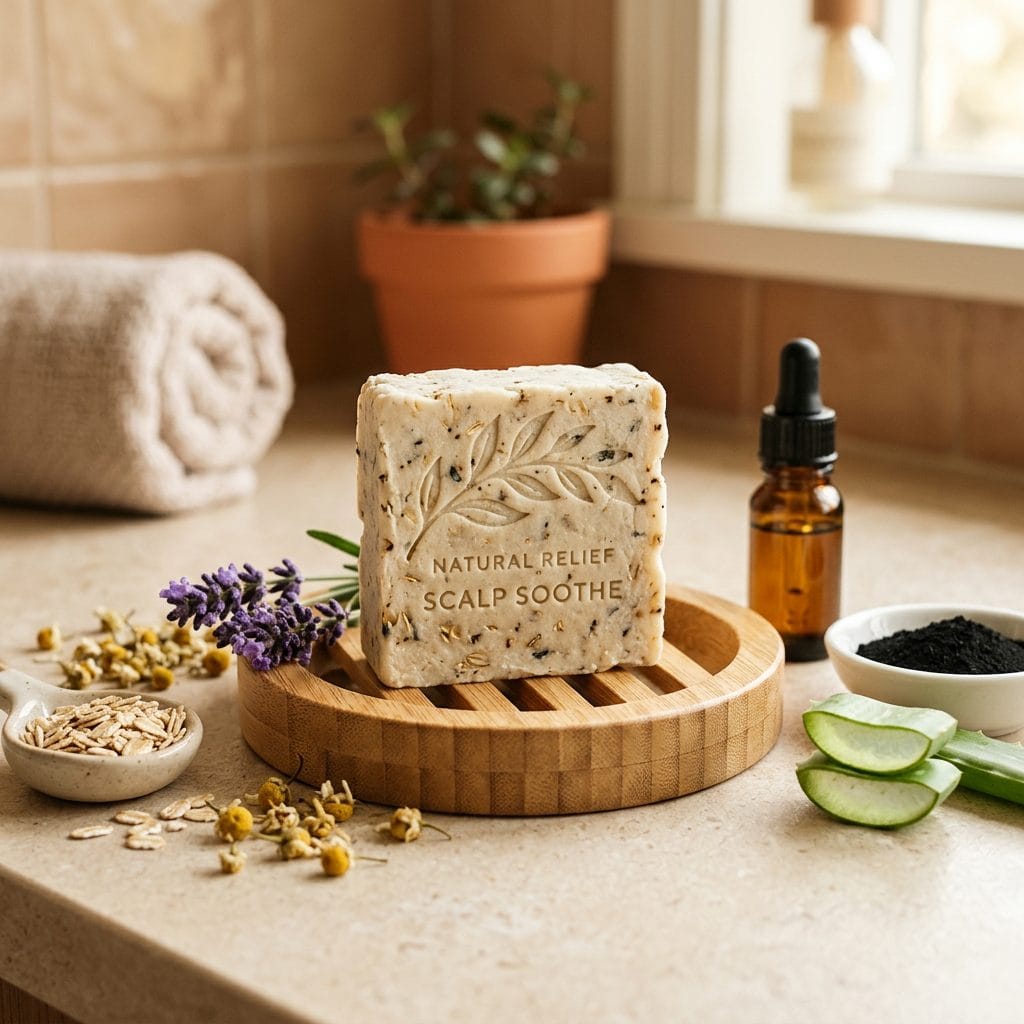
Last updated: September 28, 2026
Written by the Natural Answer team · Last reviewed September 23, 2026
Quick answer
For scalp psoriasis and eczema, choose a bar with a short ingredient list, no sulfates, no synthetic fragrance and nothing you know you react to. Cold-process soap bars wash at pH 9–10, so finish with a diluted apple cider vinegar rinse to bring your scalp back to acidic. Patch-test every new bar, and see a dermatologist if flares persist.
Introduction
If you’re dealing with scalp psoriasis, eczema, or seborrheic dermatitis, you already know: most shampoos make it worse. You’re far from alone — as of 2026, the National Psoriasis Foundation reports that 52 to 80 percent of people living with psoriasis have experienced it on the scalp.
Sulfates burn. Fragrances trigger flare-ups. “Medicated” formulas dry out your scalp until it cracks. And those “gentle, natural” shampoo bars? Half of them contain ingredients that inflame sensitive skin.
Here’s the truth: Not all shampoo bars are created equal — and choosing the wrong one can turn a manageable scalp condition into a painful, itchy nightmare.
This guide breaks down:
- Which shampoo bar formulas work for psoriasis, eczema, and seborrheic dermatitis
- Ingredients that soothe vs. ingredients that inflame
- Why hard water makes scalp conditions worse (and what to do about it)
- How to use shampoo bars without triggering flare-ups
Educational content only. Always consult a dermatologist for persistent scalp conditions.
In this guide
- Psoriasis vs. eczema vs. seborrheic dermatitis
- What to look for in a shampoo bar
- Ingredients: good vs. avoid
- Best shampoo bar types
- Medicated vs. cosmetic bars
- How hard water worsens scalp conditions
- How to patch-test a new bar
- How to use a shampoo bar with psoriasis or eczema
- When to see a dermatologist
- FAQs
- Sources
—
Scalp Psoriasis vs. Eczema vs. Seborrheic Dermatitis: How Do You Tell Them Apart?
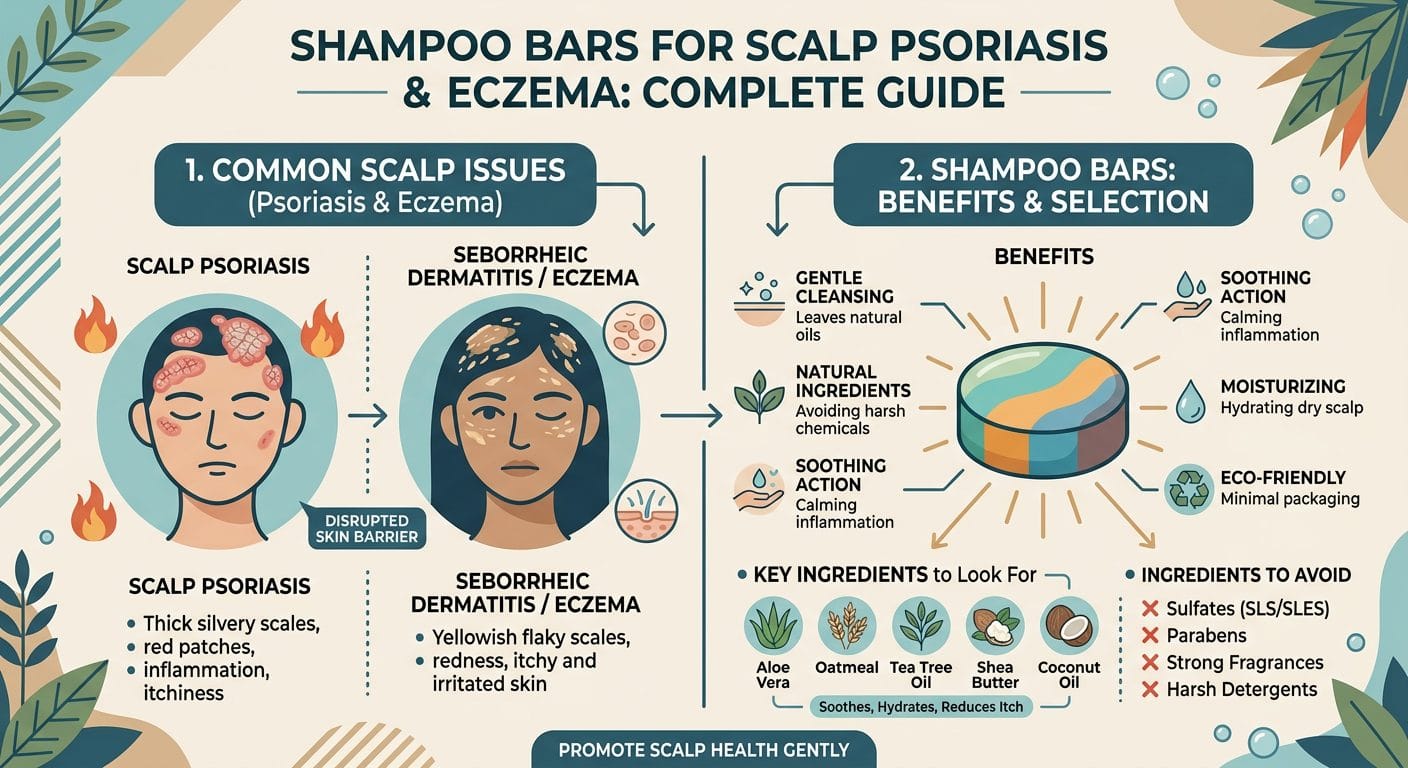
Look at the scale. Psoriasis makes thick, silvery, sharply edged plaques. Eczema makes dry, itchy, red patches that flare with irritants. Seborrheic dermatitis makes greasy, yellowish flakes in oily areas. The right shampoo depends on which one you have.
| Condition | Main symptom | Root cause | Look for in a shampoo | Avoid |
|---|---|---|---|---|
| Scalp psoriasis | Thick, silvery, well-defined plaques | Autoimmune; skin cells overproduce | Gentle cleansing; salicylic acid or tar (medicated) to lift scale | Sulfates, drying alcohols, hard scrubbing |
| Scalp eczema | Dry, itchy, red patches | Weak skin barrier; reacts to irritants and allergens | Short ingredient list, no synthetic fragrance | Fragrance, sulfates, known allergens |
| Seborrheic dermatitis | Greasy, yellowish flakes | Overgrowth of Malassezia yeast | Antifungal actives (ketoconazole, zinc pyrithione) | Heavy oils and butters left on the scalp |
Scalp Psoriasis
What it is:
- Autoimmune condition (overactive skin cell production)
- Thick, silvery scales on scalp
- Well-defined plaques
- Can extend beyond hairline (forehead, ears, neck)
Triggers:
- Stress, illness, cold weather
- Harsh shampoos (sulfates, alcohol)
- Scratching, trauma to scalp
- Hard water minerals (irritate inflamed skin)
What your scalp needs:
- Gentle cleansing (no stripping)
- Anti-inflammatory ingredients
- Moisturizing (but not oily buildup)
- An acidic finish (scalp pH is 4.5–5.5) — from a pH-balanced bar, or an ACV rinse after a soap bar
Scalp Eczema (Atopic Dermatitis)
What it is:
- Chronic inflammatory skin condition
- Dry, itchy, red patches
- Sensitive to allergens and irritants
- Often accompanied by body eczema
Hormones play a part too — if your scalp turned reactive around your late forties, read our guide to scalp sensitivity during menopause.
Triggers:
- Fragrances, essential oils
- Sulfates, harsh detergents
- Allergens (lanolin, coconut derivatives)
- Hard water (drying, mineral irritation)
What your scalp needs:
- Hypoallergenic formulas
- Fragrance-free or minimal fragrance
- Moisturizing without heavy oils
- Minimal ingredient lists
Seborrheic Dermatitis
What it is:
- Yeast (Malassezia) overgrowth on scalp
- Oily, yellowish scales
- Flaky “dandruff” (but not regular dandruff)
- Common in oily-scalp types
Triggers:
- Oily buildup
- Yeast-feeding ingredients (excess oils)
- Stress, hormones
- Not washing frequently enough
What your scalp needs:
- Antifungal ingredients (zinc pyrithione, tea tree oil)
- Clarifying cleansing (removes oil without stripping)
- Balanced moisture (not overly oily)
- Regular washing (2-3x per week)
Why Seborrheic Dermatitis Needs a Different Approach Than Psoriasis
Psoriasis and eczema need gentleness. Seborrheic dermatitis needs something more: antifungal action against the Malassezia yeast that drives it. A gentle cosmetic bar — including ours — cleans away oil and flakes, but it doesn’t kill yeast, so on its own it won’t clear an active flare. Use an antifungal shampoo (ketoconazole, zinc pyrithione or selenium sulfide) as directed; the American Academy of Dermatology notes ketoconazole is often part of the treatment plan. Keep a gentle bar for the days in between.
—
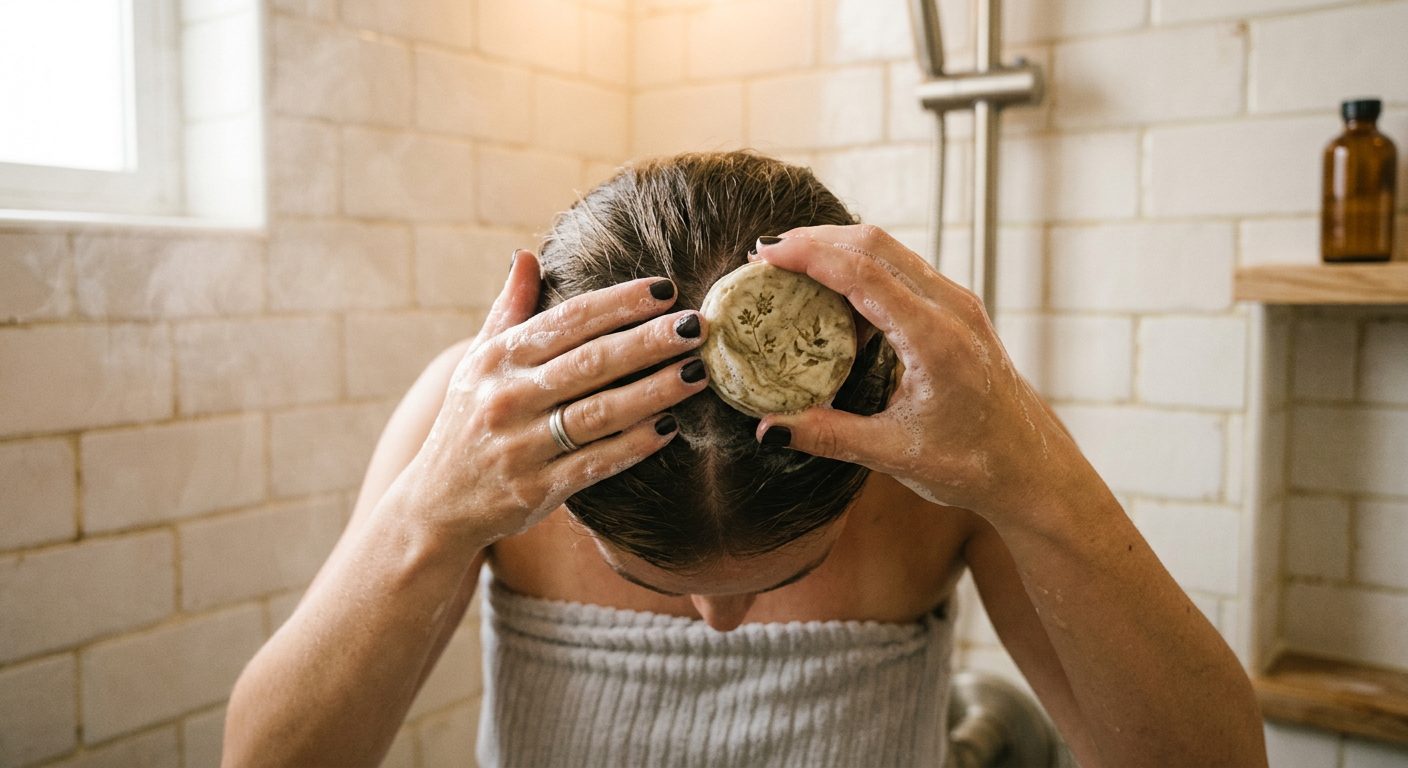
What to Look for in a Shampoo Bar for Sensitive Scalp
✅ Must-Have Features
1. Gentle Surfactants (Not Harsh Sulfates)
Avoid:
- Sodium Lauryl Sulfate (SLS) — too harsh, strips natural oils
- Ammonium Lauryl Sulfate (ALS) — irritating
Look for:
- Saponified plant oils — true soap, mild when well superfatted (finish with an acidic rinse)
- Mild syndet surfactants such as coco-glucoside or sodium cocoyl isethionate — pH-balanced as-is
Why it matters: Harsh sulfates strip the scalp’s protective barrier, worsening inflammation.
2. The Right Final pH (an Acidic Finish)
- Scalp’s natural pH is 4.5-5.5
- Left alkaline, the scalp barrier is more easily irritated — what counts is the pH your scalp ends at, not the pH of the wash
- pH-balanced syndet bars maintain acidic scalp pH (4.5–5.5); cold-process soap bars (pH 9–10) restore scalp pH with an ACV rinse after washing
Why it matters: An acidic finish keeps the barrier calm. A soap bar plus an ACV rinse gets you there as reliably as a pH-balanced bar.
3. Fragrance-Free or Minimal Fragrance
Avoid:
- Synthetic fragrances (“parfum”)
- Essential oil blends (can be irritating)
Safe options:
- Unscented (true fragrance-free)
- Single essential oil (if you know you tolerate it)
Why it matters: Fragrance allergies are a top trigger for eczema flare-ups.
4. Hard Water Compatible
Why it matters:
- Hard water minerals (calcium, magnesium) deposit on inflamed scalp
- Creates itchiness, dryness, flaking
- Soap reacts with those minerals and can leave a film if you skip the rinse
Solution: With a soap bar (like Natural Answer), finish every wash with a diluted apple cider vinegar rinse — it dissolves the film. Syndet bars lather in hard water as-is.
5. Anti-Inflammatory Ingredients (Optional but Helpful)
Soothing ingredients:
- Aloe vera (calming, hydrating)
- Oatmeal (colloidal oats reduce itching)
- Chamomile extract (anti-inflammatory)
- Calendula (wound healing, anti-inflammatory)
- Niacinamide (vitamin B3, barrier repair)
Why it matters: Reduces redness, itching, and scaling.
Shampoo Bar Ingredients: Good or Avoid for a Sensitive Scalp?
| Ingredient | Verdict | Note |
|---|---|---|
| Tea tree oil | Good for seborrheic dermatitis; caution with eczema | Antifungal, but a known irritant for reactive skin — patch-test. |
| Coconut oil / coconut derivatives | Test first | Some people with eczema react to coconut derivatives. |
| Salicylic acid | Good for psoriasis scale | Softens and lifts plaques; can dry the skin if overused. |
| Colloidal oatmeal | Good for eczema | Calms itch and supports the skin barrier. |
| Zinc pyrithione | Good for seborrheic dermatitis | Antifungal active found in many anti-dandruff shampoos. |
| Synthetic fragrance (parfum) | Avoid | A top trigger for eczema flares. |
| SLS / SLES | Avoid | Strips the scalp barrier. |
❌ Ingredients to Avoid
1. Harsh Sulfates
- Sodium Lauryl Sulfate (SLS)
- Ammonium Lauryl Sulfate (ALS)
- Sodium Laureth Sulfate (SLES)
Why: Strip scalp oils, disrupt barrier, cause dryness and irritation.
2. Fragrance & Essential Oils (if sensitive)
- Synthetic fragrance (parfum)
- Peppermint oil (cooling but can irritate)
- Eucalyptus oil (strong, can trigger reactions)
- Lavender oil (allergenic for some)
Why: Common allergens, trigger eczema flare-ups.
3. Coconut Oil in High Concentrations
- Can be comedogenic (clogs pores)
- Some eczema sufferers are allergic to coconut derivatives
Why: Coconut allergies are underdiagnosed; test first. Natural Answer bars contain saponified coconut oil, so if you know you react to coconut, patch-test before full use.
4. Soap Bars Used Without an Acidic Rinse (in Hard Water)
- True soap (lye-saponified oils) washes at pH 9–10
- In hard water, soap and minerals form a film
Why: Left on the scalp, that film and an alkaline finish can irritate. The fix is simple: a diluted ACV rinse after every wash returns the scalp to acidic and dissolves the film.
5. Alcohol (Drying Alcohols)
- Isopropyl alcohol
- Denatured alcohol
- SD alcohol
Why: Extremely drying, worsens psoriasis and eczema.
6. Preservatives (for some people)
- Methylisothiazolinone (MIT) — known allergen
- Formaldehyde releasers (DMDM hydantoin)
Why: Allergic reactions, contact dermatitis.
—
Best Shampoo Bar Types for Scalp Psoriasis & Eczema
1. Syndet Bars (a Lower-pH Alternative)
What they are: Synthetic surfactant (syndet) bars with mild cleansers such as SCI
Why they work:
- pH-balanced as-is (about 4.5–6)
- Gentle cleansing without stripping
- Lather in hard water without a rinse step
- Minimal ingredient lists
Best for:
- Psoriasis (gentle, non-irritating)
- Eczema (hypoallergenic formulas available)
- Seborrheic dermatitis (clarifying without harshness)
Hard water performance: ⭐⭐⭐⭐⭐ (Excellent)
2. Oatmeal-Based Bars (Good for Eczema)
What they are: Bars with colloidal oatmeal (finely ground oats)
Why they work:
- Oatmeal soothes itching
- Anti-inflammatory properties
- Creates protective barrier on skin
Best for:
- Eczema (reduces itching, calms inflammation)
- Psoriasis (mild cases)
Hard water performance: ⭐⭐⭐ (Moderate — depends on base formula)
Caution: In a soap-based oatmeal bar, follow with an ACV rinse if your water is hard.
3. Tea Tree Oil Bars (Good for Seborrheic Dermatitis)
What they are: Bars with 2-5% tea tree oil (natural antifungal)
Why they work:
- Tea tree oil kills Malassezia yeast
- Reduces oiliness
- Anti-inflammatory
Best for:
- Seborrheic dermatitis
- Oily scalp with flaking
Hard water performance: ⭐⭐⭐⭐ (Very Good — syndet base, or soap with an ACV rinse)
Caution:
- Can be drying if used daily (use 2-3x per week)
- Not for dry eczema or psoriasis
- Patch test first (tea tree can irritate sensitive skin)
4. Zinc Pyrithione Bars (Good for Seborrheic Dermatitis)
What they are: Medicated bars with zinc pyrithione (antifungal/antibacterial)
Why they work:
- Kills yeast overgrowth
- Reduces flaking
- Anti-inflammatory
Best for:
- Seborrheic dermatitis
- Moderate to severe dandruff
Hard water performance: ⭐⭐⭐⭐ (Very Good)
Caution: Can be drying; alternate with moisturizing bar.
5. Cold-Process Soap Bars (Pair with an ACV Rinse for Hard Water)
Why they need care in hard water:
- High pH (9-10) can temporarily affect scalp barrier
- Soap + hard water without ACV rinse = mineral scum
- Always pair with an ACV rinse (1 tbsp ACV in 1 cup water) to restore pH and prevent scum
Works well when:
- You use an ACV rinse after each wash
- You choose a well-superfatted bar (like NAP)
- You confirm no sensitivity to higher-pH products before committing
Hard water performance: ⭐⭐⭐⭐⭐ (Excellent — with an ACV rinse)
Natural Answer Bars (EU-made, palm oil-free, cold-process)
- 6 organic plant oils, saponified — real soap, no synthetic surfactants
- pH 9–10 — finish with an acidic rinse to close the cuticle
- Scented with essential oils only, no synthetic fragrance — there is no unscented bar, so patch-test if essential oils bother you
- Our pick for sensitive scalps: Lavender & White Kaolin
- Works in hard water with an ACV rinse
- €8.98 per bar (€17.95 per 2-bar pack), 50-80 washes
—
Medicated vs. Cosmetic Shampoo Bars for Psoriasis: When Is Each Right?
Medicated shampoos contain actives with clinical evidence behind them. Cosmetic bars clean gently and support scalp comfort. They do different jobs. For mild scalp psoriasis, the National Psoriasis Foundation lists two over-the-counter actives worth looking for: salicylic acid, which softens and lifts scale, and tar (coal or pine), which slows skin-cell overgrowth. For seborrheic dermatitis, antifungals such as ketoconazole and zinc pyrithione do the work.
Natural Answer bars are cosmetic, not medicated. They don’t treat psoriasis, eczema or seborrheic dermatitis. For moderate-to-severe psoriasis, a dermatologist-prescribed medicated shampoo is the first-line treatment; a gentle cosmetic bar fits on the days in between.
—
How Hard Water Worsens Scalp Conditions
The Mineral Problem
Hard water contains dissolved calcium and magnesium:
- Deposits on inflamed scalp → itching, dryness, flaking
- Reacts with soap → leaves irritating scum
- Disrupts skin barrier → worsens psoriasis, eczema
- Increases pH → alkaline water inflames skin
Signs Your Scalp Condition Is Worse Because of Hard Water
✅ Flare-ups after washing (worse than before washing)
✅ White, flaky residue on scalp
✅ Increased itching after shampooing
✅ Scalp feels tight, dry, “squeaky”
✅ Psoriasis plaques look whiter, scalier
Solutions
1. Use a Hard Water-Compatible Shampoo Bar
- Natural Answer cold-process soap bars work in hard water — use with an ACV rinse
- An ACV rinse after washing dissolves mineral film — see our apple cider vinegar rinse guide
- Some syndet bars use chelating ingredients (citric acid, EDTA) instead of a rinse step
2. Install a Shower Filter
- Removes 80-90% of calcium/magnesium
- One-time cost (~€30-80)
- Lasts 3-6 months
- Recommended for eczema/psoriasis sufferers in hard water areas
3. Rinse with Distilled Water (Final Rinse)
- After shampooing, do final rinse with distilled water
- Removes mineral residue
- Prevents deposits on inflamed skin
4. ACV Rinse (Every Wash with a Soap Bar)
- Mix 1 part apple cider vinegar + 4 parts water
- Pour over scalp after shampooing
- Leave 2-3 minutes, rinse thoroughly
- Dissolves mineral buildup, restores pH
—
How to Patch-Test a New Shampoo Bar with a Sensitive Scalp
The American Academy of Dermatology recommends testing a new product on a small spot twice a day for seven to ten days before using it widely. For a rinse-off bar, adapt it like this:
- Pick a spot. Choose a quarter-sized area on the underside of your arm or the bend of your elbow.
- Lather and wait. Work up a little lather, leave it on for as long as you would on your scalp, then rinse.
- Repeat twice a day for 7–10 days. Watch for redness, itching, burning or bumps.
- Try a small scalp area. No reaction? Wash one small patch of scalp and wait a day.
- Go full scalp. Still calm? Use it as normal. Any reaction at any step — stop and rinse well.
—
How to Use a Shampoo Bar with Psoriasis or Eczema
Step 1: Pre-Wash Prep
Brush gently (if you can):
- Use soft-bristle brush
- Loosens scales (psoriasis)
- Don’t scrub hard (worsens irritation)
Wet hair thoroughly:
- Use lukewarm water (not hot — dries scalp)
- Saturate hair and scalp (2-3 minutes)
Step 2: Lather the Bar
Hand lather method (gentlest):
- Rub bar in hands to create foam
- Apply foam to scalp (not bar directly)
- Reduces friction on sensitive skin
Direct application (if tolerated):
- Rub bar gently on scalp
- Light pressure only
Step 3: Gentle Scalp Massage
Technique:
- Use fingertips (never nails)
- Gentle circular motions
- Focus on affected areas (but don’t scrub)
- 2-3 minutes maximum
Don’t:
- Scratch
- Use fingernails
- Scrub aggressively (worsens inflammation)
Step 4: Rinse Thoroughly
Critical for sensitive scalp:
- Rinse 5+ minutes
- Ensure all lather is gone
- Leftover surfactants = irritation
Hard water tip: If you have hard water, rinse even longer — mineral deposits bind to surfactants and irritate skin.
Step 5: Post-Wash Care
ACV rinse (every wash with a soap bar; weekly with a syndet bar):
- Mix 1 part ACV + 4 parts water
- Pour over scalp
- Leave 2-3 minutes
- Rinse thoroughly
- Helps with flaking, restores pH
- Skip it on cracked or open skin — vinegar stings
Scalp oil (if needed):
- For psoriasis/dry eczema: lightweight oil (jojoba, argan)
- Apply to scalp only (not hair)
- Massage gently
Avoid:
- Hot blow drying (use cool or air dry)
- Tight hairstyles (stress on scalp)
- Scratching (worsens plaques)
—
Common Mistakes (and How to Avoid Them)
❌ Mistake #1: Using “Medicated” Bars with Harsh Ingredients
Why it’s bad: Some medicated shampoos also contain harsh sulfates and alcohol, and using them every day can dry the scalp.
The fix: Keep using medicated treatment exactly as your doctor directs, and use a gentle bar on the days in between.
❌ Mistake #2: Washing Too Frequently
Why it’s bad: Over-washing strips protective oils, worsens dryness
The fix:
- Psoriasis: 2-3x per week
- Eczema: 1-2x per week (or as needed)
- Seborrheic dermatitis: 2-3x per week (needs regular cleansing)
❌ Mistake #3: Using Hot Water
Why it’s bad: Hot water inflames skin, dries scalp, triggers flare-ups
The fix: Lukewarm water only.
❌ Mistake #4: Ignoring Hard Water
Why it’s bad: Minerals worsen inflammation, irritate sensitive skin
The fix: Shower filter + hard water-compatible bar.
❌ Mistake #5: Scrubbing to Remove Scales
Why it’s bad: Aggressive scrubbing damages skin barrier, worsens psoriasis
The fix: Gentle massage only; let shampoo loosen scales naturally.
—
Routine for Scalp Psoriasis
Weekly Wash Routine
Frequency: 2-3x per week (avoid over-washing)
Products:
- Gentle natural bar (primary cleanser)
- Medicated treatment (if prescribed, alternate days)
Routine:
1. Brush gently to loosen scales
2. Wet hair with lukewarm water (3 min)
3. Lather natural bar in hands
4. Apply to scalp, massage gently (2-3 min)
5. Rinse thoroughly (5+ min)
6. ACV rinse (every wash with a soap bar)
7. Apply scalp oil if needed
8. Air dry or cool blow dry
Between washes:
- Apply medicated treatment (if prescribed)
- Moisturize scalp with jojoba or argan oil
- Avoid scratching (trim nails)
—
Routine for Scalp Eczema
Gentle Wash Routine
Frequency: 1-2x per week (or as needed to remove buildup)
Products:
- Fragrance-free natural bar
- Moisturizing scalp oil (post-wash)
Routine:
1. Wet hair with lukewarm water (2-3 min)
2. Lather bar in hands (not on scalp)
3. Apply foam gently
4. Massage with fingertips (1-2 min)
5. Rinse thoroughly (5+ min)
6. With a soap bar: diluted ACV rinse (skip on cracked skin)
7. Pat dry (don’t rub)
8. Apply lightweight oil to scalp
Daily care:
- Avoid triggers (fragrances, allergens)
- Moisturize scalp daily (if very dry)
- Use shower filter (if hard water area)
—
Routine for Seborrheic Dermatitis
Anti-Fungal Routine
Frequency: 2-3x per week
Products:
- Tea tree oil bar OR zinc pyrithione bar
- Gentle natural bar (alternate)
Routine:
1. Wet hair thoroughly (2 min)
2. Lather antifungal bar
3. Massage into scalp (focus on oily areas)
4. Leave on scalp 2-3 minutes (contact time for antifungals)
5. Rinse thoroughly (5 min)
6. ACV rinse (every wash with a soap bar)
Alternate days:
- Use gentle natural bar (prevents dryness from antifungals)
- Don’t over-cleanse (worsens oil production)
—
When to See a Dermatologist
Changing shampoo helps many people. It isn’t enough when you notice:
- Plaques spreading beyond the hairline to the forehead, ears or neck
- Bleeding, cracking or oozing when you scratch or wash
- Pus-filled bumps, or a scalp that is hot and swollen
- No improvement after four weeks of gentle care and over-the-counter treatment
- Hair loss in the affected patches
—
FAQs: Shampoo Bars for Scalp Psoriasis & Eczema
Can shampoo bars trigger psoriasis flare-ups?
Yes — if you use the wrong bar.
Triggers:
- Harsh sulfates (SLS, ALS)
- Soap bars used without an acidic rinse
- Fragrances, essential oils
- Hard water + soap scum
Safe options:
- Gentle, low-fragrance bars
- Fragrance-free formulas
- Hard water-compatible (use with ACV rinse)
Are shampoo bars better than liquid shampoo for eczema?
It depends on the formula, not the format.
Shampoo bars can be better if:
- They’re fragrance-free
- Cold-process soap bars (like NAP) with an ACV rinse, or syndet bars
- Minimal ingredient lists
- No preservatives (liquid shampoos need preservatives)
Liquid shampoos can be better if:
- You need specific medicated ingredients (ketoconazole, coal tar)
- You have severe contact allergies (easier to avoid certain ingredients)
Bottom line: Choose based on ingredients, not format.
Will a shampoo bar make my scalp drier?
Only if:
- It’s a soap bar used without an acidic rinse
- Contains harsh sulfates
- You wash too frequently
Gentle natural bars won’t dry scalp if:
- An acidic finish (pH-balanced as-is, or an ACV rinse after a soap bar)
- Mild surfactants (decyl glucoside, SCI) for syndet bars; or saponified plant oils (sodium cocoate, sodium olivate) for cold-process soap bars like NAP
- You wash 2-3x per week maximum
- You follow with moisturizing oil if needed
Can I use a shampoo bar with seborrheic dermatitis?
Yes — specific bars work well.
Best options:
- Tea tree oil bars (antifungal)
- Zinc pyrithione bars
- Clarifying natural bars (removes oil without stripping)
Avoid:
- Heavy oil/butter bars (feed yeast)
- 2-in-1 moisturizing bars (too oily)
How do I know if hard water is making my scalp condition worse?
Signs:
- Condition worsens after moving to new location
- Flare-ups worsen after washing
- White, flaky residue on scalp
- Scalp feels tight, itchy after washing
Test: Check your water hardness (test strips ~€10 or check municipal water report).
Solution: Install a shower filter, and with a soap bar finish every wash with an ACV rinse.
Are shampoo bars safe for scalp psoriasis?
Yes, if the formula is gentle. Choose a bar with no sulfates, no synthetic fragrance and a short ingredient list. With a cold-process soap bar, finish with a diluted apple cider vinegar rinse. A cosmetic bar won’t treat psoriasis, so keep using any medicated treatment your dermatologist prescribes.
What shampoo ingredients should I avoid with eczema?
Avoid synthetic fragrance, harsh sulfates (SLS, SLES), drying alcohols and allergenic preservatives such as methylisothiazolinone. Essential oils and coconut derivatives trigger some people too. Patch-test any new bar on your arm for seven to ten days before using it on your scalp.
Does hard water make scalp psoriasis worse?
It can. Calcium and magnesium leave deposits on inflamed skin and react with soap to form a film, which adds itch and flaking. A shower filter reduces the minerals, and an acidic rinse after washing dissolves any film left behind.
Can an ACV rinse help with psoriasis flare-ups?
It can ease scale and itch for some people by returning the scalp to acidic and removing mineral residue. Dilute it (one tablespoon in a cup of water) and skip it on cracked, bleeding or open skin, where vinegar stings. It doesn’t replace medicated treatment.
When should I see a dermatologist instead of changing shampoo?
See a dermatologist if plaques spread beyond your hairline, your scalp bleeds or oozes, you notice pus-filled bumps or hair loss in the patches, or nothing improves after four weeks of gentle care and over-the-counter treatment.
—
Natural Answer Shampoo Bars for Sensitive Scalp
Why they work for psoriasis, eczema, and seborrheic dermatitis:
✅ Cold-process soap — 6 organic plant oils, saponified; no synthetic surfactants
✅ Works in hard water — with an ACV rinse to dissolve mineral film
✅ Short ingredient list — less allergen exposure
✅ No synthetic fragrance — scented with essential oils only (patch-test if they bother you)
✅ No sulfates — true soap, not SLS
✅ Palm oil-free — eco-conscious, sustainable
✅ Vegan — no animal-derived ingredients
Perfect for:
- Sensitive scalps, alongside any medicated treatment (patch-test first)
- Hard water areas (with an ACV rinse)
- Gentle daily/weekly cleansing
Size: 100g bar = 50-80 washes
Price: €17.95 per 2-bar pack (€8.98 per bar)
Made in: EU (EU quality standards)
Shop Natural Answer Shampoo Bars →
—
Final Thoughts
Scalp psoriasis, eczema, and seborrheic dermatitis are challenging — but the right shampoo bar makes a massive difference.
The key: Choose a gentle bar, avoid irritating ingredients, patch-test first, and address hard water if it’s an issue.
Avoid: Harsh sulfates, fragrances, and hot water. For soap bars (cold-process, pH 9–10), always follow with an ACV rinse to restore scalp pH.
Our choice: a cold-process soap bar with a short ingredient list (like Natural Answer), finished with an ACV rinse — used alongside, not instead of, any treatment your dermatologist prescribes.
Your scalp deserves relief. Choose wisely.
—
Related Guides:
- Best Shampoo Bars for Sensitive Scalp
- Shampoo Bars for Hard Water: Complete Guide
- Best Shampoo Bars for Dandruff: Do They Actually Work?
- How to Use Shampoo Bars: Complete Guide
- Apple Cider Vinegar Rinse for Shampoo Bars
- Best Shampoo Bars for Oily Hair
Sources
- National Psoriasis Foundation. Scalp Psoriasis (prevalence; OTC salicylic acid and tar).
- American Academy of Dermatology. How to test skin care products.
- American Academy of Dermatology. Seborrheic dermatitis: Diagnosis and treatment.
Ready to Make the Switch?
Ready to experience the benefits of a natural shampoo bar? Browse our complete collection of cold-processed soap bars — each one made with 6 organic plant oils and zero synthetic additives.